As an Amazon Associate, we earn from qualifying purchases. Some links on this site are affiliate links at no extra cost to you. Our recommendations are based on thorough research and editorial judgment.


Credit Card and Key Fob Safety Near Wireless Chargers

Wireless chargers can damage the magnetic strips of credit cards and affect the functionality of key fobs. Strong magnetic fields may cause irreversible demagnetization, especially for older low-coercivity cards. It is vital to keep credit cards and key fobs several inches away from charging devices. Additionally, avoid placing them in phone cases during charging. Following these precautions helps maintain the longevity and effectiveness of your important items. Further tips on protecting your cards and fobs are available.
Key Takeaways
- Keep credit cards and key fobs several inches away from wireless chargers to prevent demagnetization and operational malfunctions.
- Prolonged exposure to strong magnetic fields from chargers can irreversibly damage the magnetic strips on traditional credit cards.
- EMV-equipped cards are more resilient, but it’s still best to avoid placing them near charging devices during use.
- Wireless chargers can activate key fob systems inadvertently, draining battery life and causing functionality issues.
- Always remove credit cards and key fobs from the vicinity of wireless chargers to ensure their longevity and proper functionality.
Understanding Demagnetized Credit Cards
You may be interested


When credit cards become demagnetized, they lose the ability to convey essential information to card readers. This issue typically results from damage to the magnetic strip, often caused by prolonged exposure to magnetic fields or contact with magnetized materials. Items like speakers or poorly designed phone cases can contribute to this problem.
While newer EMV technology improves resistance to demagnetization, general wear and tear still increase the likelihood of a magnetic strip becoming unreadable.
To minimize potential risks, it is wise to store credit cards away from magnetic sources. Activities such as wireless charging should also prompt caution, as they can inadvertently lead to accidental demagnetization of credit cards. Just as fitness watch bands require proper storage conditions to maintain their durability and performance, credit cards also benefit from being kept in cool, dry places away from potential sources of magnetic interference. Proper care helps maintain functionality and accessibility.
Causes of Magnetic Strip Malfunction

Magnetic strip malfunctions can arise from several factors that affect the card’s ability to be read by machines. Strong magnetic fields, such as those generated by wireless chargers and certain MagSafe cases, can lead to temporary or permanent damage. General wear and tear also contribute, as scratches or bending can disrupt the magnetic strip’s surface, resulting in reading failures.
Low-Coercivity (LoCo) credit cards are particularly vulnerable to magnetic interference, as opposed to High-Coercivity (HiCo) cards, which are designed to withstand it better. Prolonged exposure to magnets may cause irreversible demagnetization, preventing cards from relaying account information. To mitigate these risks, users should keep credit cards several inches away from any magnetic sources. Premium wireless chargers that are Qi-certified typically generate electromagnetic fields that, while optimized for safe device charging, can still pose a risk to magnetic strips if cards are placed directly on or near the charging surface.
Recommended Products
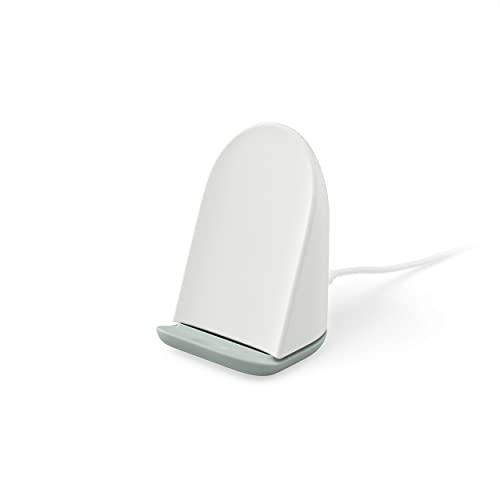
Google Pixel Stand (2nd gen) can wirelessly charge Pixel 6, Pixel 6 Pro, Pixel 7 and Pixel 7 Pro with the same power you’d get from a wired charger; just set your Pixel down and power up, phone case and all.Compatible devices:Cellular_phones.Special Feature:Wireless Charger.Input voltage: 120 volts

New 10W charger is up to 60% faster
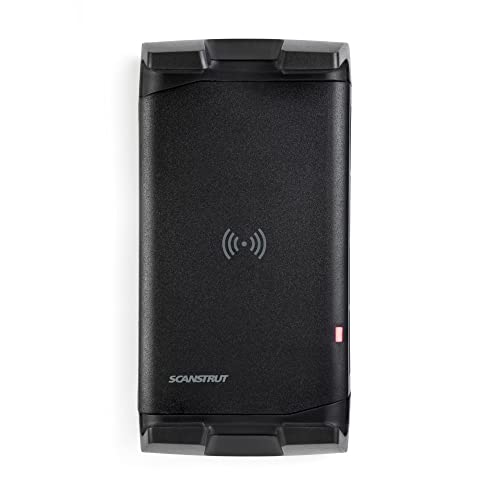
New 10W charger is up to 60% faster
The Impact of Cell Phones on Credit Cards

Although cell phones generally emit weak magnetic fields, their potential to affect credit cards should not be overlooked. Modern credit cards, equipped with EMV chips, are more resilient against demagnetization. However, prolonged exposure to stronger magnetic materials might harm magnetic strips, especially in older cards.
To minimize any risk, users are advised to keep credit cards separate from their cell phones. This precaution is particularly important when placing cards in a phone case during wireless charging. Wireless chargers pose a higher risk of demagnetization due to magnetic fields generated in close proximity.
It is recommended to remove credit cards and key fobs from cases while charging, ensuring their longevity and functionality. Many 15W wireless chargers include built-in safety features such as over-voltage and over-current protection, but these protections focus on device safety rather than preventing magnetic interference with cards.
Recommended Products

6.1" Super Retina XDR display with ProMotion. 5G Superfast downloads, high?quality streaming

Inpsired by the new Captain America: A suit and shield aren’t what defines a hero—their character does. But if you’re ready to take the mantle, then become a symbol of good with the limited-edition, officially licensed Marvel Xbox controller and charging stand.

USE A MOUSE WITHOUT A MOUSE! : Say goodbye to carrying both a keyboard and a mouse—Mokibo Fusion Keyboard combines them into one sleek, ultra-portable device. With its built-in precision touchpad, the keyboard functions as a touchpad three times larger, extending over the key surface for seamless and responsive control, allowing you to type, swipe, and navigate effortlessly without an external mouse.
Risks of Charging Your Phone With Cards Nearby

How does charging a phone near credit cards or key fobs pose a risk? When placed between a phone and a wireless charger, credit cards can suffer demagnetization. The magnetic fields from the charger can damage traditional magnetic strips, rendering the cards unusable. Additionally, key fobs may experience functionality disruptions.
To stay safe, users should remove cards and key fobs from their pockets or cases before charging. Leaving these objects near the charger can also cause electronic systems to activate unintentionally, leading to device malfunctions or battery drain. Following Apple’s guidelines about distancing sensitive items from wireless chargers is essential, ensuring that cards remain in good condition and are safe to use when needed. Modern Qi2 certified chargers include built-in safety systems that help prevent overheating and protect devices, though they still require keeping magnetic strips and electronic items at a safe distance during charging.
Recommended Products
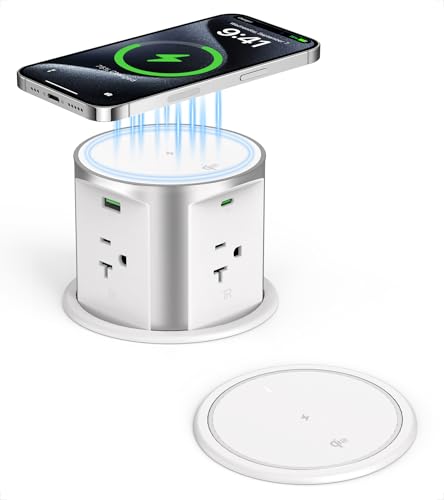
4-Sided Outlet Design:A 20A pop up outlet that surrounds you with power. 4 AC outlets—one on each side—deliver up to 2500W. Run high-draw electronics across your desk, kitchen, or RV simultaneously. No more unplugging one device to use another, no flickering lights, no tripped breakers.

Synchronized Flashing: Increase visibility and safety with Lumos Firefly's synced lights that create a larger visibility footprint, making it easier for motorists to spot and gauge your size and distance.

[FOR PORSCHE PANAMERA PERFECT WIRELESS CHARGING ACCESSORY] - New Upgrade Car Wireless Charger is newest customized design for Porsche Panamera 2017 2018 2019 2020 2021 2022 2023 All Models. you can take advantage of the wireless charging function in your car with it is a must-have upgrade accessory to NEW Panamera interior. Fit for the original car center console of all (2017-2023) Porsche Panamera Executive Sport Turismo Turbo S E-Hybrid perfectly.
Safety of Phone Case Magnets on Credit Cards

Charging a phone near credit cards can lead to concerns about magnetism, particularly regarding phone case designs. Most phone cases employ weak magnets, typically not strong enough to demagnetize credit cards. This makes them generally safe for storage; however, caution is advised with certain card types, such as LoCo cards.
Users should avoid placing credit cards inside cases with strong magnetic closures, especially near concentrated magnetic fields. While typical phone speaker magnets, including those in MagSafe cases, are unlikely to cause damage, it is still prudent to keep cards separate from magnetic areas. Wallet cases should be approached cautiously, ensuring card placement minimizes the risk during wireless charging. Similar to wireless charging stations, magnetic charging cables for devices like Apple Watches use auto-alignment magnetic technology that creates localized magnetic fields, so maintaining distance from credit cards remains a wise precaution.
Protecting Your Key Fob From Wireless Charging Damage
Have you ever considered the potential risks of placing your key fob on a wireless charging pad? Many users might not realize that doing so can lead to battery failure and operational malfunctions. Wireless chargers may inadvertently activate the fob’s systems, which drains power and shortens its lifespan.
To safeguard your key fob, make certain to remove it from any wireless charging area. Additionally, it’s wise to avoid leaving metallic or magnetic objects on the pad, as they can also cause harm. Rivian’s guidelines do not highlight these specific risks, underlining the importance of user caution. Maintaining proper distance from wireless chargers will help guarantee the functionality and longevity of your key fob. Just as water-resistant materials enhance the durability of everyday accessories like watch bands, protecting your key fob from environmental stressors ensures it continues to function reliably over time.
Recommended Products

FARADAY SIGNAL BLOCKING TECHNOLOGY: Multishield Faraday lining blocks cellular, WiFi, Bluetooth, GPS, RFID, NFC, and key fob signals when properly sealed; creates a signal-isolated environment for laptops, tablets, and wireless-enabled devices

Military-Grade Faraday Dry Bag: Designed for military and law enforcement forensics investigators; also used for grab-and-go missions, government and executive travel, personal data security, signal isolation, EMP/CME protection, and EMF reduction.
![TORRAS Magnetic Shockproof for Google Pixel 9 Pro & Pixel 9 Clear Case, [Fit for MagSafe][16FT Mil-Grade Drop Protection] Translucent Slim Protective Phone Case](https://m.media-amazon.com/images/I/41F3YvNKnvL._SL500_.jpg)
[Powerful Magnet Lock Your Charger Firmly] The Pixel 9/9 Pro case with MagSafe is designed with built-in magnets that lock onto magnetic accessories in a snap. It works with Google Pixel 9/9 Pro accessories like Pixel Stand 1 Gen and 2, Magnetic chargers, magnetic wallets, car mount stand wireless charger, credit cards or key fobs etc. Unlock super convenience and surprise with Google Pixel 9 Pro Magnetic case.
Best Practices for Keeping Cards Safe During Charging
Maintaining the safety of credit cards during wireless charging is essential for preventing damage. Users should always remove credit cards from phone cases while using wireless chargers, as magnetic fields can cause demagnetization. Additionally, placing credit cards between the phone and the charging pad poses a risk to both magnetic strips and RFID chips.
When utilizing a MagSafe charger, it’s vital to keep cards and key fobs away from the charging area. Regularly checking for sensitive items in the phone case before charging is advisable. To enhance safety, consider investing in MagSafe wallet accessories, which are designed to hold cards securely while minimizing risks associated with wireless charging. For added convenience, look for accessories with a quick-release mechanism that allows you to easily detach your cards when needed without compromising their protection.
Recommended Products

MAGNETIC ATTRACTION: Easily attach and remove the Fuzion wallet to the back of your 14 Pro Max case

Secure & Stylish: This RFID-protected passport holder for men and women ensures your personal data stays private. It fits 1-6 cards plus your passport in a sleek, secure wallet, perfect for all your travels.

Your Phone Always Within Reach The Remi Includes an adjustable, removable crossbody strap (46"–54" x ¾") with an O-shaped loop for attaching accessories like keys, AirPods, charms, or the wallet itself
Frequently Asked Questions
Will Wireless Chargers Affect Credit Cards?
Wireless chargers can affect credit cards due to magnetic interference, potentially causing signal disruption to magnetic strips. This risk is heightened when cards are placed between the device and charger during the charging process.
Can I Put My Credit Card Next to My Phone?
To avoid playing with fire, individuals should refrain from keeping their credit card next to their phone during phone charging. Proper credit card placement guarantees longevity, safeguarding against potential damage from wireless magnetic fields or prolonged exposure.
Is It Safe to Be Near a Wireless Charger?
It is generally safe to be near a wireless charger, adhering to wireless charging standards. However, individuals should remain aware of potential electromagnetic interference, especially regarding nearby sensitive electronics, to avoid unintended damage or functionality issues.
Does RFID Blocking Interfere With Wireless Charging?
Like clouds obscuring the sun, RFID technology can create wireless interference during charging. This disruption stems from RFID-blocking materials, which hinder electromagnetic fields, ultimately degrading charging efficiency and speed when placed between a charger and a device.