As an Amazon Associate, we earn from qualifying purchases. Some links on this site are affiliate links at no extra cost to you. Our recommendations are based on thorough research and editorial judgment.

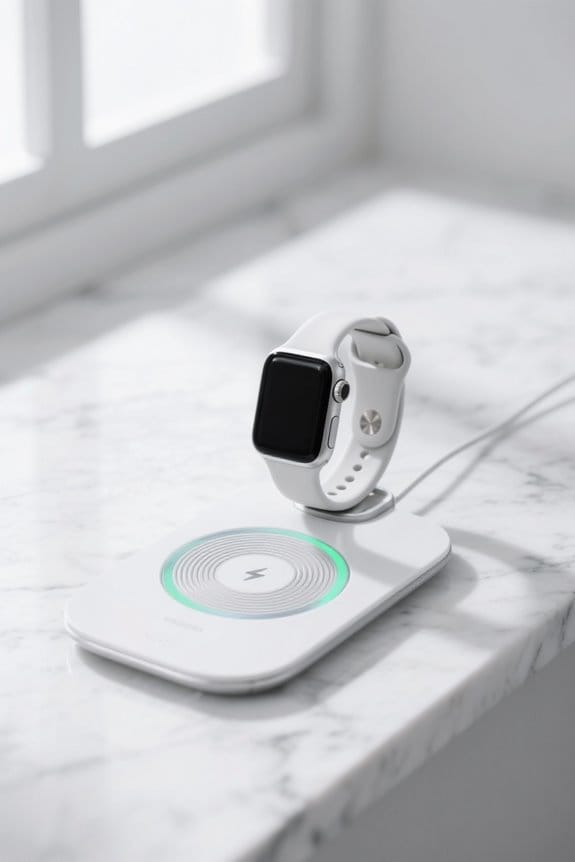
Understanding Charging Coil Placement and Alignment

Inductive charging leverages precise coil placement to transfer power effectively. Proper alignment between the transmitter and receiver coils is essential, as even minor misalignments can cause significant efficiency losses. Misalignment can slow charging, generate excess heat, and reduce the lifespan of devices and chargers. Advanced technologies, such as magnetic resonance and coil design optimization, improve alignment tolerance and charging performance. Discover how these innovations shape the future of wireless charging solutions as you explore further.
Key Takeaways
- Inductive charging relies on transmitter and receiver coils for cable-free power transfer, emphasizing the importance of precise coil placement.
- Proper alignment between coils is crucial, as even slight misalignments can lead to significant efficiency losses, reducing charging speed.
- Technologies like the Qi 2 standard and magnetic resonance enhance coil alignment, allowing for greater tolerance in misalignment and improved efficiency.
- Real-world innovations, such as magnetic alignment systems and dual-coil designs, optimize energy transfer by accommodating multiple device orientations.
- Future advancements aim to use dynamic tracking systems and machine learning for real-time alignment adjustments, enhancing wireless charging efficiency and reducing heat generation.
The Principle of Inductive Charging
You may be interested

Inductive charging is a widely used technology that enables devices to recharge without the need for cables. This method utilizes a transmitter coil in the charging pad and a receiver coil in the device, creating a magnetic field through electromagnetic induction. When correctly aligned, this system allows for efficient power transfer, minimizing energy loss in the process.
For ideal charging efficiency, both coils must operate within a specific range, usually just a few millimeters apart. The introduction of the Qi standard and technologies like Magnetic Resonance aims to enhance this experience by improving coil design and tolerance for alignment variations. These innovations support better performance, ensuring that devices charge effectively and reliably. Modern wireless chargers incorporate magnetic alignment features that enable automatic positioning between the charging pad and device, ensuring optimal coil placement for maximum charging efficiency.
Importance of Coil Alignment

Efficient energy transfer in wireless charging systems largely hinges on the alignment of the transmitter and receiver coils. Proper coil alignment is essential for ensuring effective inductive wireless charging, as misalignment can greatly reduce charging efficiency. Tests indicate that misaligned coils may incur energy losses exceeding 30%, negatively impacting both charging speed and overall performance.
Effective alignment guarantees that the electromagnetic field generated by the transmitter coil adequately induces current in the receiver coil, leading to ideal charging outcomes. Advanced technologies, like built-in magnets in Qi 2 charging pads, enhance coil alignment. These innovations minimize the need for precise positioning, improving charging speeds and reducing the likelihood of disruptions caused by misalignment. Similar to how quick-release mechanisms in fitness watch bands facilitate easy switching, magnetic alignment features in modern charging systems allow for swift and effortless device placement without requiring manual adjustment.
Recommended Products
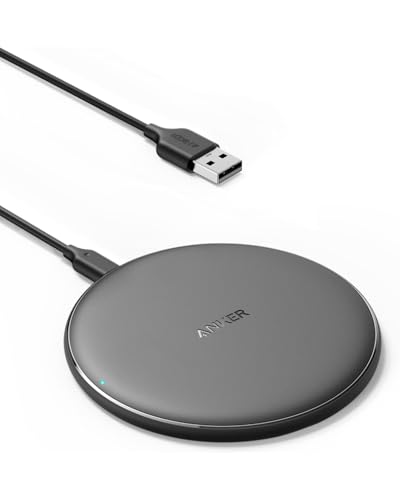
The Anker Advantage: Enjoyed by over 50 million users worldwide, our leading technology will change the way you charge.

Faster 25W Wireless Charging: This Qi2.2 certified wireless charger delivers up to 25W fast wireless charging for your iPhone 17/16 series, powering your phone from 0% to 50% in just 30 minutes, enjoy next-level charging speed

【25W Powerful & Secure Wireless Charger】This 25W apple wireless charger with Qi2.2 certification supports 25W fast charging for phones and 5W for earbuds. It charges iPhone 16 to 60% in about 40 minutes with a 16V+ PPS adapter (adapter not included).This wireless charger iPhone has an intelligent chip against overcharge, overcurrent, overvoltage, overheating and short circuit. Efficient heat dissipation and auto power-off ensure safe low-temperature charging and battery protection.
Effects of Misalignment on Charging Efficiency

Although wireless charging has revolutionized how devices are powered, misalignment between the transmitter and receiver coils can especially hinder charging efficiency. Even minor horizontal or vertical misalignments greatly reduce power transfer, leading to slower charging times. The best charging efficiency relies heavily on coil placement and the gap size between assemblies; larger gaps can worsen misalignment issues, further impeding the charging process.
Additionally, energy losses due to misalignment not only diminish efficiency but can also generate excess heat. This heat dissipation may negatively impact the longevity of both the charger and the device being charged. Advanced charging technologies, including features like magnetic alignment, aim to minimize these misalignment effects, ultimately enhancing overall charging efficiency. Some modern chargers incorporate dual-coil design to provide multiple charging positions, reducing the likelihood of misalignment issues during everyday use.
Recommended Products

【Strong Magnetic Alignment|Secure & Stable Charging】Equipped with an advanced magnetic array, the charger automatically aligns to the optimal charging position and holds your iPhone firmly in place (✅ no slipping even when shaken). ⚠️ Note: Non-MagSafe cases may weaken magnetic adsorption. For stronger attachment, we recommend using a MagSafe-compatible case.

【Strong Magnetic Force|360° Auto-alignment】Uses strong magnets for a secure and connection that boosts charging efficiency. You can use this charger without removing your regular case as long as it's less than 2.5mm thick.It's compatible with iPhone 12-17 series. The powerful magnets auto-align your phone to the optimal spot, ditching the need for cables plug-inbond, adjust the angle freely to charging

Strong Magnetic Alignment|Secure & Stable Charging: Equipped with an advanced magnetic array, the charger automatically aligns to the optimal charging position and holds your Phone firmly in place (✅ no slipping even when shaken). ⚠️ Note: Be must used with a MagSafe/magnetic case to achieve the magnetic effect For stronger attachment, we recommend using a MagSafe-compatible case
Technologies Enhancing Coil Placement

As wireless charging technology advances, ensuring proper coil placement becomes increasingly important for efficient power transfer. The Qi 2 standard incorporates built-in magnets in charging pads that enhance coil alignment, greatly improving efficiency. In addition, advanced receiver coil designs use tightly wound wire loops to boost voltage induction, facilitating effective performance despite minor misalignments.
Magnetic resonance charging systems further enhance wireless power transfer over larger distances with a higher tolerance for misalignment by tuning both coils to a resonant frequency. Predictive modeling, through finite element analysis, allows engineers to examine electromagnetic interactions and improve coil placement. Furthermore, real-time adaptive systems are being developed to dynamically adjust coil parameters, ensuring ideal charging conditions based on device positioning. Modern 10W wireless chargers typically feature dual coil designs that create a wider charging area, accommodating both vertical and horizontal device orientations while maintaining optimal power transfer efficiency.
Recommended Products

15W MagSafe-Compatible Charging: Experience fast charging with a 15W wireless output that matches the performance of MagSafe technology.

Rapid 15W Wireless Charging: Unlock 15W high-speed charging with Qi2 certification and power your iPhone 16 Pro Max to 20% in just 19 minutes. For the best fast charging experience, we recommend using a 20W or higher output charger (not included).

【Fast Charging 2-Pack for Phones & Earbuds】Supports 25W wireless fast charging with the magnetic compatibility standard. This 2-pack charger efficiently powers your smartphones and earbuds - perfect for home, office, or sharing with family
The Role of Magnetic Resonance in Alignment

Magnetic resonance technology plays an essential role in improving alignment during wireless charging. By utilizing resonant inductive coupling, this technology enables efficient energy transfer even with misalignment. Both the transmitter and receiver coils are tuned to the same resonant frequency, enhancing power transfer across wider gaps.
This approach considerably reduces sensitivity to alignment, allowing charging devices to operate effectively even when positioned off-center. Advanced coil designs and materials boost performance against misalignment issues, leading to better overall charging efficiency. In addition, magnetic resonance technology supports simultaneous charging of multiple devices, contributing to a more versatile wireless charging experience. Consequently, users can benefit from effective power transfer regardless of precise coil alignment. However, potential alignment issues may still hinder optimal charging speeds, particularly when using incompatible cases or accessories.
Case Studies: Real-World Applications
Demonstrating practical applications of charging coil placement and alignment reveals significant advancements in wireless charging technology. Case studies illustrate that precise coil alignment in tightly coupled systems can enhance efficiency by up to 30%, compared to misaligned setups. For instance, furniture integrated with wireless charging, such as desks and countertops, strategically places coils for improved usability without compromising design.
Additionally, a major smartphone manufacturer discovered that incorporating MagSafe technology increased charging efficiency by 20% due to magnetic alignment features. In the automotive sector, vehicle manufacturers have focused on precise coil alignment within charging pads for electric vehicles, optimizing energy transfer and reducing charging time. Modern charging stations often feature dual-coil design capabilities that allow devices to charge effectively in both vertical and horizontal orientations, maximizing convenience and maintaining optimal alignment. These real-world applications highlight the effectiveness of charging coil placement and its impact on consumer electronics.
Best Practices for Optimal Coil Positioning
Ideal coil positioning plays a crucial role in enhancing the efficiency of wireless charging systems. Best alignment guarantees maximum energy transfer efficiency, which greatly reduces charging times. To achieve this, the distance between transmitter and receiver coils should be minimized, ideally a few millimeters apart.
Both horizontal and vertical alignments must be considered meticulously, as misalignment can lead to efficiency losses and increased heat generation. Incorporating built-in magnets for guiding placement, as seen in Qi 2 standards, significantly improves alignment accuracy. MagSafe technology utilizes magnetic alignment to ensure secure device attachment and optimal charging efficiency, particularly for compatible Apple devices. Regular testing and adjustments to coil design parameters, such as diameter and winding configuration, also enhance charging performance. Overall, precise positioning is essential for effective charging systems, providing reliable operation in various scenarios.
Recommended Products

Rapid 15W Wireless Charging: Unlock 15W high-speed charging with Qi2 certification and power your iPhone 16 Pro Max to 20% in just 19 minutes. For the best fast charging experience, we recommend using a 20W or higher output charger (not included).

[Qi2-Certified 15W Fast Charging] – Charge your iPhone 17 Pro up to 100% in just 1 hour and 38 minutes, 2X faster than 7.5W chargers. No more low-battery interruptions during intense gaming sessions. Perfect for mobile gamers who need non-stop power.
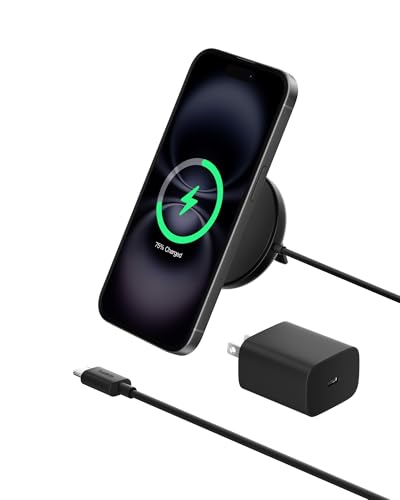
FAST CHARGE W/ THE LATEST Qi2 TECHNOLOGY: Conveniently place your phone on the magnetic charger to fast charge your iPhone, Samsung*, or Qi2 compatible device up to 15W. Qi2 gives you up to 2x faster wireless charging** so you can spend less time waiting.
Future Developments in Charging Alignment Technologies
Advancements in charging alignment technologies aim to revolutionize the efficiency of wireless power transfer systems. Future innovations will leverage real-time tracking and feedback mechanisms, enabling devices to communicate and refine charging alignment automatically. These systems will dynamically adjust coil parameters, enhancing power transfer efficiency despite misalignment.
Emerging machine learning algorithms will analyze user behavior, allowing for ideal charging settings based on typical device placement patterns. Magnetic resonance charging technology will see improvements, providing flexibility in coil alignment and efficient energy transfer over longer distances. Ongoing research focuses on advanced materials to mitigate misalignment’s impact on heat generation, improving safety and operational efficiency in wireless power transfer systems. Modern power banks already incorporate Qi wireless charging technology with capacities up to 30,800mAh, supporting fast charging speeds of 15W or more while maintaining safe operating temperatures through advanced thermal management. This will greatly change how devices charge in daily use.
Recommended Products

⚡️【Super Fast Charging】Equipped with a 15W max Qi wireless charging pad and a 22.5W max USB-C port, making this Magsafe Qi2 Power Bank a versatile companion for your devices. Whether you are using it as an iPhone wireless charger or charging via USB-C, you can effortlessly charge your devices at home or on the go.
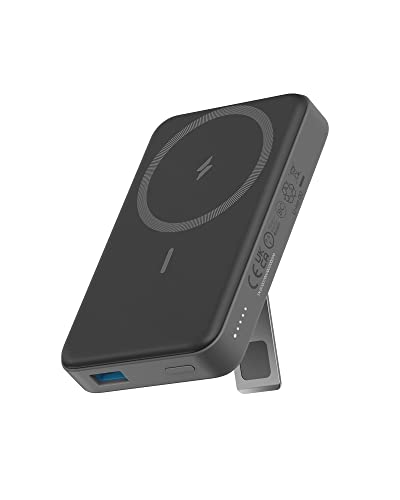
Power Up in a Flash: Enjoy the convenience of a 20W USB-C Power Delivery port with this portable charger, charging an iPhone up to 3 times faster and keeping you connected during crucial moments. Ideal for those who need a quick power boost on the go.

Wired for Speed, Wireless for Convenience: Maximize charging efficiency with 30W fast charging through a built-in cable, or embrace the ease of 7.5W wireless charging. (Note: The power bank is optimized for the iPhone 12/13/14/15/16/17 series. Android devices will not support the magnetic feature.)
Frequently Asked Questions
What Is the 80/20 Rule for Charging?
The 80/20 rule for charging emphasizes that ideal coil distance and magnetic alignment dramatically enhance wireless efficiency. By addressing charging speed and energy loss, manufacturers can improve device compatibility, thermal management, and safety standards in power transmission.
Where Is the Optimal Placement of EV Charging Stations?
The ideal placement of EV charging stations requires strategic location analysis, considering urban infrastructure, traffic patterns, user accessibility, installation costs, and demographic factors, while also accounting for environmental impacts, charging speed, and land use efficiency.
What Is the Best Position for Wireless Charging?
In the domain of wireless charging technology, ideal coil alignment is paramount. Despite device compatibility issues and charging distance effects, innovations like magnetic field influence and efficiency optimization strategies promise to overcome consumer adoption barriers, enhancing future charging experiences.
Does Magsafe Have to Be Centered?
MagSafe does not have to be perfectly centered, though achieving proper charger alignment enhances efficiency and charging speed. Magnetic attraction aids user convenience, while improper placement may lead to interference issues, heat generation, and reduced power transfer.


