As an Amazon Associate, we earn from qualifying purchases. Some links on this site are affiliate links at no extra cost to you. Our recommendations are based on thorough research and editorial judgment.


Understanding 5W, 10W, and 15W Wireless Charging Speeds

Understanding 5W, 10W, and 15W wireless charging speeds is essential for peak device performance. The wattage determines how quickly a phone can recharge. Devices supporting 5W charge slowly, while 10W offers a moderate speed. Devices that support 15W utilize advanced technology for faster charging, achieving approximately 50% battery in 30 minutes. Choosing the right charger based on these specifications will enhance efficiency. Learn how to select a suitable charger and maximize your wireless charging experience.
Key Takeaways
- 5W wireless charging is the standard speed for older devices, taking longer to charge, often reaching full battery in several hours.
- 10W charging serves as a middle ground, providing faster charging than 5W but typically not available for all devices.
- 15W wireless charging, compatible with newer devices, offers significantly reduced charging time, achieving about 50% battery in approximately 30 minutes.
- Compatibility with the device and charger is crucial; 15W fast charging may require specific standards like Qi2 or MagSafe for optimal performance.
- Higher wattage charging, such as 15W, generally leads to more heat generation, potentially affecting efficiency if not managed properly.
Fast Charging Explained
You may be interested


While fast charging offers a convenient way to power devices quickly, its effectiveness largely hinges on the compatibility between the charger and the device itself. Devices that support the Qi2 standard can utilize 15W chargers, which enhance charging speeds considerably. For example, compatible smartphones can achieve around 35% battery in just 30 minutes. However, older models might only support slower charging speeds of 7.5W.
It’s essential to note that while overnight charging typically uses lower power outputs like 5W or 7.5W for gradual charging, 15W chargers may experience energy loss during the conversion process, affecting charging efficiency. Many 15W wireless chargers include built-in safety features such as over-voltage and over-current protection to prevent overheating and other hazards during the charging process. Ultimately, the choice of charger directly impacts both the power output and the overall charging experience for the user.
How Many Watts Do I Need?

Determining the right wattage for wireless charging involves understanding the device’s maximum input capabilities. Generally, older models support 5W to 7.5W, while newer ones can accept up to 15W. For example, iPhones 8 to 11 charge at 7.5W, while iPhone 12 and later models can utilize 15W with a compatible charger.
Device compatibility greatly affects charging speed. Samsung Galaxy S25 models natively support 15W, but older versions may require special cases for higher wattage. If charging overnight, a 5W or 7.5W charger suffices, but for quick top-ups, consider using a 10W or 15W charger. Additionally, assess the charging location to verify wattage aligns with charging needs, avoiding overkill in slow-charging scenarios. When selecting a wireless charger, ensure it includes essential safety features like overcharge protection and temperature control to prevent overheating during extended charging sessions.
How Many Watts Do the Main Phone Brands Support?

Understanding the wireless charging capabilities of major smartphone brands is essential for enhancing performance and ensuring efficiency. Mobile brands like Apple and Samsung vary considerably in their charging compatibility. iPhones from models 8 to 11 charge at a maximum of 7.5W with the Qi standard, while iPhones 12 to 14 support 15W charging using MagSafe. The latest iPhone 15 and newer models fully embrace 15W with Qi2 technology.
Samsung’s S25 series natively supports 15W through Qi2, but earlier models like the S24 require special magnetic cases for improved speeds. Many Android devices also range from 5W to 15W based on their specific design, highlighting the importance of checking individual model specifications for ideal fast charging experiences. With 15W fast charging capabilities, the iPhone 15 can reach 50% power in just 30 minutes, significantly reducing overall charging time compared to lower wattage options.
What Is 15-Watt Wireless Charging?

15-watt wireless charging represents a significant advancement in charging technology, offering faster energy delivery than traditional options like 5W or 10W. This technology utilizes inductive charging principles, where a charging pad generates a magnetic field to facilitate energy transfer to a device’s receiving coil.
Devices compatible with the Qi2 standard can take advantage of 15-watt wireless charging, achieving approximately a 35% battery boost in just 30 minutes. Although 15W wireless charging is efficient, actual charging speed may depend on the device’s maximum input capability; some devices may only accept lower wattages. Additionally, the convenience of this technology makes it ideal for fast-topping off, eliminating the need for cables in busy lifestyles. For optimal performance with fast charging capabilities, it’s recommended to use a QC3.0 adapter to maximize charging speeds and efficiency.
How Does 15-Watt Wireless Charging Work?

The process of 15-watt wireless charging hinges on the principles of inductive charging, which involves the transfer of energy between two coils. A charging pad generates a magnetic field, allowing energy to flow to a second coil in compatible devices. This method enhances the charging process under the Qi2 standard, improving efficiency and reliability for faster energy transfer.
With 15-watt support, devices can achieve approximately 50% battery life within 30 minutes, making it an effective means of fast charging. Additionally, while some heat is generated, quality chargers incorporate safety features to manage temperature and prevent overheating, ensuring safe operation.
The Advantages of 15-Watt Wireless Charging
Enhanced convenience in charging technology brings numerous advantages to users seeking efficient power solutions. The 15W wireless charging standard considerably reduces charging time, allowing devices to reach approximately 50% battery in just 45 minutes. This efficiency is especially beneficial for high-demand devices that require quick power boosts without cumbersome cables.
Moreover, 15W chargers, often compatible with MagSafe technology, guarantee peak performance on modern smartphones. They come with built-in safety features to manage overheating and overcharging, promoting better battery health over time. Fast charging pads utilizing 15W technology can charge devices up to 3X faster than standard models, significantly enhancing the user experience for those with time-sensitive power needs. As 15W becomes the preferred charging standard, users can expect an improved overall experience, combining fast charge capabilities with reliable and safe power delivery for their devices. These chargers typically include smart chip technology that provides essential protections against overcurrent and overheating during the charging process.
Recommended Products

Modern upgrades with a top mounted wireless charging pad, USB/USB-C accessory charging ports, and a sleek customizable LED display showing time/temperature/humidity make the ultimate modern home safe. Low profile safe design blends into its environment, great for RVs or nightstands. The auto-open safe drawer can secure a full size pistol (up to 9"), jewelry, small documents, and other personal belongings. INTERIOR DIMENSIONS: 9" x 7.5" x 1.5"

6.1" Super Retina XDR display with ProMotion. 5G Superfast downloads, high?quality streaming

Charge at the Highest Wireless Standard Available: Powered by 25W Qi2.2 ultra-fast charging, your iPhone 17 Pro charges to 50% in just 22 minutes—up to 6× faster than standard 5W wireless chargers. Enjoy the wireless speed you've been waiting for without compromising battery health. Actual performance may vary.
Pros and Cons of 15-Watt Wireless Charging
Faster charging speeds bring undeniable benefits, but there are also key drawbacks to evaluate with 15-watt wireless charging. The primary advantage of 15W is its ability to charge devices to around 50% in approximately 45 minutes, given device compatibility with the Qi2 standard. However, it may generate more heat during operation, affecting overall energy efficiency.
Additionally, while 15W wireless charging offers convenience, it is generally slower than wired fast charging for immediate power needs. Users must weigh these pros and cons; the lower energy efficiency and potential heat generation can result in longer overall charging times compared to traditional wired solutions. To mitigate heat-related concerns, look for chargers with overheating protection and other built-in safety mechanisms. Therefore, careful consideration is essential.
Recommended Products

【ONE TIME WIRELESS CHARGING】This BoostCharge Pro charger allows you to charge 2 devices at the same time:15W iPhone and Apple Watch or AirPods with 5W power.

FAST CHARGING WITH THE LATEST Qi2 TECHNOLOGY: Put your iPhone or other Qi2 compliant device on the magnetic charger for fast charging with up to 25 W. This MagSafe compatible inductive charger with Qi2 technology allows up to 5 times faster wireless charging*.
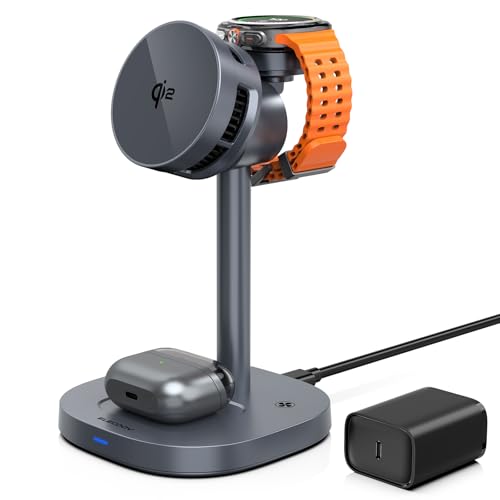
3-in-1 Qi2 Wireless Charger for Samsung: Charge your phone, Galaxy Watch, and earbuds at once, reducing cable clutter and keeping your desk tidy. Its compact and silent design fits perfectly on your nightstand, desk, or living room, it easily meets the charging needs of multiple devices ***Adapter required ≥45W***
Best Phones for 15-Watt Wireless Charging
Many modern smartphones now offer compatibility with 15-watt wireless charging, making them an excellent choice for users looking to enhance their charging experience. The iPhone 12 and newer models, such as the iPhone 14, utilize MagSafe technology for efficient charging speeds up to 15W. Samsung’s Galaxy S25 series supports native 15W Qi2 charging, while older models like the S24 require specialized cases. Additionally, flagship Android phones like the Google Pixel 6 and 7 also support 15W charging, catering to fast charger needs. Premium smartphones from brands like OnePlus and Xiaomi continue this trend, offering robust options. Always verify phone compatibility, as not every model within a brand supports high-speed wireless charging. For optimal safety and performance, look for chargers with built-in protections against overcharging, short circuits, and overheating.
Recommended Products

3 IN 1 TRAVEL WIRELESS CHARGER: 3-in-1 charging pad conveniently charges your devices in one central location. Dedicated charging for iPhone, AirPods, & Apple Watch. Compatible with MagSafe ensures efficient and optimal charging of your devices. Minimize cord clutter and have a more organized charging experience for traveling. Apple Nightstand mode.

3-in-1 Wireless Charging Powerhouse: Base One Max 3 in 1 charging station seamlessly charges your iPhone (up to 15W with MagSafe), Apple Watch, and AirPods simultaneously, keeping all your devices powered up.

PEACE OF MIND: Wake up to fully charged devices every morning with this dedicated 3-in-1 power hub that eliminates the stress of low battery warnings and tangled cables during your travels
How to Choose the Right 15-Watt Charger
Selecting the right 15-watt charger can greatly enhance the experience of using compatible smartphones. First, verify that the charger supports Qi or MagSafe standards for maximum charging efficiency. Next, evaluate its safety features, such as temperature control and over-voltage protection, to guarantee device safety during wireless charging.
Consider the design preferences that suit your lifestyle, whether a flat pad or an upright stand, as these affect visibility during use. Additionally, pair the charger with a suitable wall adapter that delivers adequate power output for improved charging performance. Finally, explore options with multi-device capabilities or built-in cooling systems to enhance convenience and battery longevity. Look for chargers with non-slip surfaces and rubber rings that provide stability and prevent your device from sliding during the charging process. A thoughtful selection maximizes the benefits of your 15-watt charger.
Recommended Products
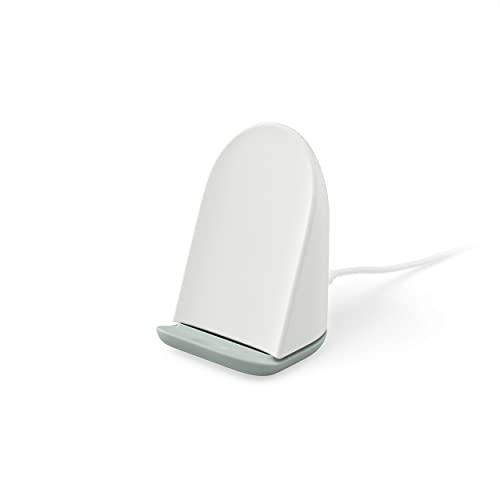
Google Pixel Stand (2nd gen) can wirelessly charge Pixel 6, Pixel 6 Pro, Pixel 7 and Pixel 7 Pro with the same power you’d get from a wired charger; just set your Pixel down and power up, phone case and all.Compatible devices:Cellular_phones.Special Feature:Wireless Charger.Input voltage: 120 volts

HIGH SPEED CHARGING: Equipped with Qi2, the latest in wireless charging, for a faster, safer, and more efficient charge up to 15W. High speed and MagSafe compatible for a super seamless charge. LED indicator lets you know when your devices are charging.

𝗗𝗲𝘀𝗶𝗴𝗻𝗲𝗱 𝗳𝗼𝗿 𝗔𝗽𝗽𝗹𝗲 𝗗𝗲𝘃𝗶𝗰𝗲 𝗖𝗵𝗮𝗿𝗴𝗶𝗻𝗴 – A 3-in-1 wireless charger that simultaneously powers your iPhone, Apple Watch, and AirPods. Delivers up to 15W Qi2 fast wireless charging for compatible iPhone models via MagSafe-aligned magnetic connection.
Finding a Great Charger for Your Budget
Although budget constraints can limit options, finding a reliable wireless charger is still achievable. Budget-friendly chargers under $20 typically offer 5W to 15W charging capabilities, suitable for basic overnight or desk use. Safety certifications, such as Qi, should be a priority to guarantee compatibility and reliable charging.
Mid-range options, priced between $20-$40, often feature a better build quality, enhancing usability with items like non-slip surfaces. Higher-end chargers, costing over $40, provide advanced features such as multi-device charging and faster performance. For users with multiple Apple devices, a 3-in-1 wireless charging station can simultaneously power an iPhone, Apple Watch, and AirPods while providing fast 15W output.
To make informed choices, consumers should check customer reviews for insights into quality and performance. This approach helps navigate the varied wireless charger market effectively, assuring adequate functionality without overspending.
Recommended Products

Iconic Glyph Interface: The iconic Glyph Interface invites you to look at your smartphone less by bringing critical tracking right to the transparent back of Phone (2). From countdown timers and volume indicators to Uber arrivals and food deliveries, glance at the customized LED light sequences to stay informed without ever being sucked into endless screen scrolling

6.7" flexible LTPO AMOLED display, HDR10+ & SGS Low Blue Light, 10-bit color depth, 120Hz refresh rate, 2412x1080px at 394 ppi, 4700mAh Battery, LED Glyph Backdoor

Intel Core i3-1220P processor with pre-installed DDR4 8GB RAM, M.2 128G NVMe SSD, WiFi 6E, Thunderbolt4, MicroSD Card Reader, VESA Mount, and Chrome OS
Tips for Getting the Most From Your Wireless Charger
Maximizing the efficiency of a wireless charger requires attention to several key factors. First, position your device correctly on the charging pad; misalignment can lead to slower charging speeds and inefficiencies. Using a compatible wall adapter rated for at least 15W will enhance power delivery, ensuring peak performance from your 15W wireless charger.
Keep your wireless charger clean and free from obstructions, as dust can hinder energy transfer. Avoid thick phone cases, as they reduce charging efficiency by obstructing energy flow. Most wireless chargers work effectively with cases up to 5mm thick, maintaining reliable charging without requiring case removal. Additionally, experiment with different surfaces to find the best location for heat dissipation and charging speed. Following these tips will help users achieve fast and efficient wireless charging for their Qi-enabled devices.
Frequently Asked Questions
Is 10W or 15W Better for Wireless Charging?
In the charging speed comparison, 10W is often preferred for its efficiency ratings and reduced heat generation concerns, while 15W offers faster wireless charging benefits for compatible devices. User experience reviews suggest selecting chargers based on brand performance analysis and cost considerations.
What Is the Difference Between 5W and 15W Chargers?
The difference between 5W and 15W chargers lies in charging speed, power delivery, and compatibility. While 15W offers faster charging and better efficiency, heat generation and device compatibility may affect user convenience and cost comparison.
Is 15 Watt Wireless Charging Fast?
Fifteen-watt wireless charging is considered fast due to improved charging efficiency and user convenience. However, heat generation and device compatibility can impact battery lifespan, making speed comparison with wired options essential for customer preferences in charging accessories.
What Is the Difference Between 5W and 10W Wireless Charger?
The difference between 5W and 10W wireless chargers lies in charging efficiency and time. While 10W enhances user experience with faster power boosts, it generates more heat, affecting safety and device compatibility, consequently requiring careful cost comparison.