As an Amazon Associate, we earn from qualifying purchases. Some links on this site are affiliate links at no extra cost to you. Our recommendations are based on thorough research and editorial judgment.


Extended Power Profile (EPP) in Qi Charging Explained

The Extended Power Profile (EPP) enhances the Qi wireless charging standard, allowing up to 15 watts of power transfer. This is a significant upgrade from the Basic Power Profile (BPP), which caps at 5 watts. EPP reduces charging time, supports multiple device types, and boosts energy efficiency. Both the charger and device must be EPP-certified for ideal performance. As technology evolves, further advancements in wireless charging, such as Qi2, are on the horizon.
Key Takeaways
- The Extended Power Profile (EPP) allows wireless charging up to 15 watts, significantly faster than the 5 watts of the Basic Power Profile (BPP).
- EPP requires both the charger and receiving device to be EPP-certified for optimal charging performance and efficiency.
- EPP enhances energy transfer efficiency and minimizes charging time, taking approximately 2-2.5 hours for a full charge on compatible devices.
- Many modern flagship smartphones, such as the iPhone 12 series and Samsung Galaxy S series, support EPP for faster charging capabilities.
- Qi2, introduced in 2023, offers enhanced features over EPP and maintains backward compatibility, improving device alignment and charging speeds to 25 watts.
What Is the Extended Power Profile (EPP)?
You may be interested

The Extended Power Profile (EPP) is a significant advancement in the Qi wireless charging standard, designed to enhance the efficiency of charging various devices. With EPP capabilities, devices can receive power levels of up to 15 watts, fostering a faster charging experience compared to the Basic Power Profile (BPP), which is limited to 5 watts.
This improved standard addresses consumer demands for quicker charging solutions and supports a broader range of devices. To achieve peak performance, both the charger and the receiving device need EPP certification, typically using a USB-C Power Delivery (PD) adapter that delivers at least 18 watts (9V/2A). Importantly, EPP chargers remain compatible with BPP devices, charging them at the lower wattage as needed. Many modern wearables, including fitness trackers and sleep tracker bands, now support wireless charging capabilities with battery life ranging from 14-30 days depending on usage patterns.
The Basics: Understanding BPP and EPP

Understanding the distinctions between the Basic Power Profile (BPP) and the Extended Power Profile (EPP) is essential for anyone interested in wireless charging technology. BPP supports a maximum power output of 5 watts, while EPP can deliver up to 15 watts, considerably enhancing charging speeds. This increased performance addresses the growing demand for quicker power solutions in the Qi standard.
For peak EPP performance, both the wireless charger and the receiving device must be EPP-certified, ideally utilizing a USB-C Power Delivery adapter with at least 18 watts. Although EPP and BPP devices can work together, devices without EPP certification will charge at BPP wattage, limiting their compatibility and charging efficiency. With 15W wireless chargers, users can achieve a full charge in approximately 2-2.5 hours for compatible devices, making them a practical solution for fast charging needs.
Recommended Products

【Strong Magnetic Alignment|Secure & Stable Charging】Equipped with an advanced magnetic array, the charger automatically aligns to the optimal charging position and holds your iPhone firmly in place (✅ no slipping even when shaken). ⚠️ Note: Non-MagSafe cases may weaken magnetic adsorption. For stronger attachment, we recommend using a MagSafe-compatible case.

Strong Magnetic Alignment|Secure & Stable Charging: Equipped with an advanced magnetic array, the charger automatically aligns to the optimal charging position and holds your Phone firmly in place (✅ no slipping even when shaken). ⚠️ Note: Be must used with a MagSafe/magnetic case to achieve the magnetic effect For stronger attachment, we recommend using a MagSafe-compatible case
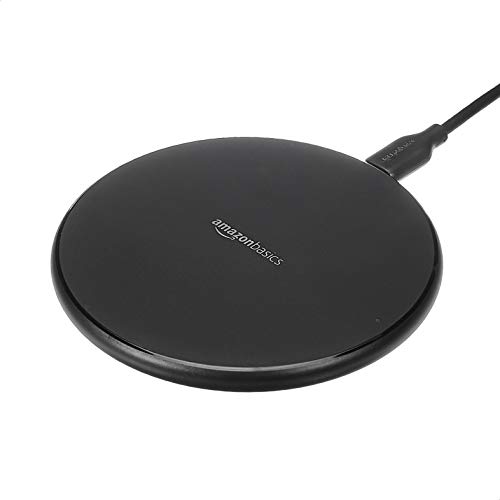
HIGH-SPEED DYNAMIC CHARGING: Enjoy fast and efficient charging with optimized chipsets that deliver 15W for LG, 10W for Samsung, and 7.5W for iPhones using compatible 15W wireless chargers
Key Differences Between BPP and EPP

While both Basic Power Profile (BPP) and Extended Power Profile (EPP) cater to wireless charging, they vastly differ regarding performance and requirements. The Extended Power Profile supports charging up to 15 watts, offering fast-charging capabilities that remarkably enhance the charging experience. In contrast, BPP is limited to just 5 watts, making it slower and less efficient.
Furthermore, EPP has more stringent technical requirements, ensuring higher device performance and safety standards. This also translates into better compatibility across a wider range of devices for users opting for EPP-certified products. It’s important to note that using an EPP charger with a BPP device will yield the maximum output of only 5 watts, limiting its potential.
Some modern wireless chargers now support even higher power outputs, with 20W wireless chargers capable of boosting an iPhone 15 from 10% to 50% in approximately 30 minutes.
Recommended Products

Faster 25W Wireless Charging: This Qi2.2 certified wireless charger delivers up to 25W fast wireless charging for your iPhone 17/16 series, powering your phone from 0% to 50% in just 30 minutes, enjoy next-level charging speed
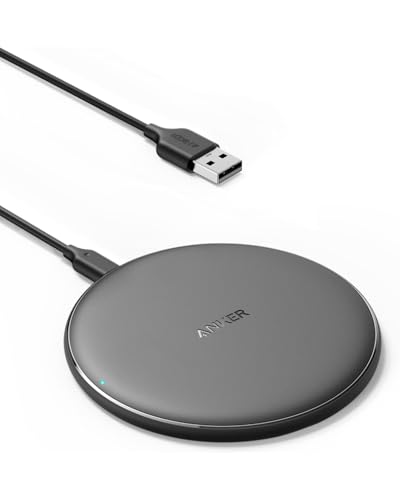
The Anker Advantage: Enjoyed by over 50 million users worldwide, our leading technology will change the way you charge.

Up to 10W Wireless Charging: Delivers up to 10W for Samsung Galaxy and 7.5W for iPhone models. Requires a 9V / 2A adapter (not included) for best performance. Charges an iPhone 15 in approximately 3 hours and 47 minutes.
Advantages of Using EPP for Wireless Charging

Enhanced charging capabilities characterize the Extended Power Profile (EPP) in wireless charging technology. EPP allows for faster charging speeds of up to 15 watts, which is considerably quicker than the Basic Power Profile‘s 5 watts. This increase in power benefits user convenience by reducing charging times, making it ideal for modern devices.
EPP-certified chargers enable efficient charging by minimizing energy loss during power transfer. Additionally, this technology enhances interoperability, allowing various compatible devices, including newer smartphones and accessories, to charge more effectively. To maximize performance, both the charger and device must be EPP-certified, often utilizing a USB-C Power Delivery adapter. Many EPP-compatible chargers also incorporate safety certifications such as over-voltage protection and foreign object detection to ensure reliable and risk-free charging. Overall, EPP provides users with a better charging experience and convenience.
Interoperability of BPP and EPP Devices

The interaction between Basic Power Profile (BPP) and Extended Power Profile (EPP) devices is significant for user accessibility in wireless charging. While these devices can operate together, they do have limitations. EPP chargers can provide up to 15 W of power, enhancing charging speed for compatible EPP devices. However, if you connect a BPP-certified device, the charging speed will be capped at 5 W, aligning with BPP specifications. Additionally, some EPP chargers not certified for specific brands may still charge at BPP wattage when used with those devices. Understanding this interoperability is vital. Consumers should verify compatibility among power profiles, which ultimately enhances the effectiveness of their wireless charging accessories across various devices in accordance with Qi specifications. Many modern wireless chargers support multiple charging modes with outputs ranging from 5W to 15W, automatically adjusting power delivery based on the connected device’s capabilities.
Factors Influencing Power Delivery With EPP
Several key factors influence the efficiency and effectiveness of power delivery when using the Extended Power Profile (EPP). The most notable factor is the alignment between the charger’s and device’s coils; proper alignment is essential to maximize power transfer. Additionally, the quality of charging accessories plays a significant role; using certified products guarantees compatibility and ideal charging speed.
EPP chargers also incorporate foreign object detection, enhancing user safety by preventing unidentified items from interrupting power delivery. Performance is further enhanced when both the charger and receiving device are EPP-certified, allowing for maximum power of up to 15 watts. Finally, a USB-C Power Delivery (PD) adapter, typically offering a minimum output of 18 watts, is recommended to fully leverage EPP capabilities. Ensuring chargers are Qi-certified is important for maintaining safety standards and reliable performance across different devices.
Requirements for Optimal EPP Performance
Achieving ideal performance with the Extended Power Profile (EPP) requires specific conditions to be met. First, both the charger and receiving device must be EPP-certified to guarantee they can handle higher power outputs according to EPP specifications. Users should utilize a USB-C Power Delivery (PD) adapter with a minimum output of 18 W (9V/2A) for peak charging speed. Additionally, a compatible USB-C cable specifically designed for USB-C PD is vital to maintain EPP efficiency. Finally, verifying smartphone compatibility with EPP through the Wireless Power Consortium’s database is essential, as various smartphone manufacturers may enforce specific power output limits, making it important to choose appropriate chargers for maximum performance. For devices like smartwatches that support wireless charging, ensuring compatibility with specific models is equally important before purchasing charging accessories.
Recommended Products

Two-in-One Convenience: Keep one charger at your desk and one on your nightstand for easy access. No need to move chargers between rooms.
![Fast Wireless Charger, [2 Pack] NANAMI Wireless Charging Stand Compatible with iPhone 17/17 Air/17 Pro/17 Pro Max/16/15/14/13, Desktop Nightstand Phone Charger Dock for Galaxy S26/S26+/S25/S24/S23/S22](https://m.media-amazon.com/images/I/418fFHIIlyL._SL500_.jpg)
[Comes With 2 Packs] - Comes with 2 packs, which will be more convenient for you to get one for work and one for home, one for your iPhone and one for your Android phone if you have two mobile phones, or one for you and one for your wife/husband

The Anker Advantage: Enjoyed by over 50 million users worldwide, our leading technology will change the way you charge.
Compatibility: Which Smartphones Support EPP?
Compatibility with the Extended Power Profile (EPP) is essential for maximizing wireless charging efficiency. EPP supports charging speeds of up to 15W, making it ideal for modern smartphones looking for faster wireless charging options. Several flagship smartphones from top manufacturers, including Apple, Samsung, and Google, have adopted EPP standards. Notable devices include:
- iPhone 12 series and newer
- Samsung Galaxy S series (starting from S10)
- Google Pixel 6 and newer
For peak EPP performance, both the charging pad and the smartphone must be EPP-certified. If either device is not EPP-certified, the charging speed will revert to lower Basic Power Profile (BPP) levels. Users can confirm a smartphone’s EPP compatibility through the Wireless Power Consortium’s database. Many users pair their EPP-compatible iPhones with MagSafe battery packs that offer 15W wireless charging for convenient on-the-go power solutions.
Recommended Products

[Compatible with iPhone and Android Devices] Enabled wireless charging devices or devices with receivers, such as compatible with iPhone 17/17 Pro/17 Pro Max/Air/16/16 Plus/16 Pro Max/15/15 Plus/15 Pro/15 Pro Max/14/14 Plus/14 Pro/14 Pro Max/13/13 mini/13 Pro/13 Pro Max/iPhone 12/12 mini/12 Pro/12 Pro Max, compatible with Samsung Galaxy S25/S24/S23/S22/S21/S20/ S20+/S10 and so on; 5W charging mode works on Any wireless-charging-enabled devices like Google Pixel 3/3XL/4XL

⚡【Charger Broad Compatibility】The wireless charging pad provides wireless charging for all wireless charger devices. 30W Max Fast Charging,This wireless charger support 5 kinds of output power schemes:30W/15W/10W/7.5W/5W.Different devices will automatically adapt to different output powers,Compatible with iPhone 15/14/13/12/11 series/SE/XR/XS/X/8 Plus, Compatible with Samsung Galaxy S23/S22/S21/S20/S10/S9/S8/7/Buds/Buds Live/Buds2/buds Pro, Note 20/10/9/8/7;and other wireless charger phones.

【3 Charging modes Available for Different Phones】7.5W charging mode is for iPhone 17/17 Pro/17 Pro Max/Air/16/15/14/14 Plus/14 Pro/14 Pro Max/13/13 Pro/13 Mini/13 Pro Max/12/SE 2020/11/XS/XR/X/8 with latest iOS System; 10W charging mode is compatible with S25/S24/S23/S22/S22 Ultra/S21/S20/Note 10/S10/S10E and so on; 5W charging mode works on Any wireless-charging-enabled devices like Google Pixel 3/3XL/4XL and other wireless-charging-enabled phones. Note: Adapter is Not Included, QC 2.0/3.0 adapter will be highly recommended.
Certified Moshi Wireless Chargers for EPP
Moshi offers an impressive selection of EPP-certified wireless chargers designed to deliver fast charging speeds up to 15W. These chargers are engineered for compatibility with major smartphone brands, ensuring a seamless charging experience for both iPhone and Android users.
High-quality materials enhance their reliability, while features like foreign object detection (FOD) and automatic power control prioritize safety during charging. Moshi’s EPP-certified products undergo rigorous testing to meet the stringent requirements set by the Wireless Power Consortium, ensuring peak performance.
Users can greatly enhance their device’s charging efficiency by using Moshi’s range of EPP-certified wireless chargers alongside EPP-compatible smartphones and accessories, making them a reliable choice for fast charging needs. Similar to other premium options, Moshi chargers incorporate overheating protection and short-circuit prevention to safeguard devices during operation.
Recommended Products
![[Apple MFi Certified]Magnetic Wireless Charger Apple Mag Safe Charger,15W 6FT Fast Wireless Charging Pad for AppleiPhone 16 Pro Max/16 Pro/16 Plus/15 Pro Max/14/13/12/AirPods3/2/Pro/Pro2,Charging Pad](https://m.media-amazon.com/images/I/3131NIotNZL._SL500_.jpg)
15W Portable Wireless Charger iPhone:with a 20W USB C Power Adapter,the Apple magnetic charger for iPhone supports up to 15W fast magnet charging speed for your iPhone 16/iPhone 15/iPhone 14/iPhone 14/iPhone 12 Series,fast charging your iPhone 14 to 50% in just 30 minutes and from 0 to 100% in just 2-2.5 hours, 3X faster then the original 5W iPhone Charger

【25W MAGNET PORTABLE WIRELESS IPHONE CHARGER】 With a 40W USB C Power Adapter, the apple magnetic charger for iPhone supports up to 25W fast magnet charging speed for your iPhone 17 16 15 14 13 12 Series, fast charging your iPhone 17 Pro Max to 50% in just 30 minutes and from 0 to 100% in just 2 hours, 3X faster then the original 5W iPhone Charger.
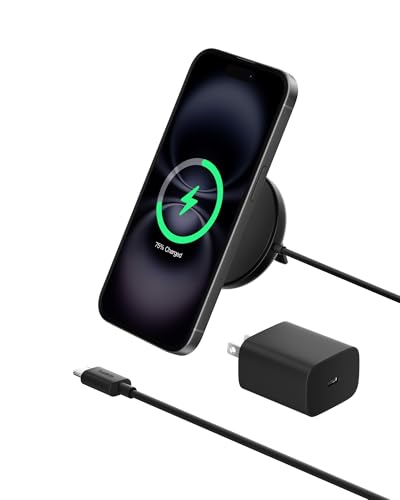
FAST CHARGE W/ THE LATEST Qi2 TECHNOLOGY: Conveniently place your phone on the magnetic charger to fast charge your iPhone, Samsung*, or Qi2 compatible device up to 15W. Qi2 gives you up to 2x faster wireless charging** so you can spend less time waiting.
Historical Adoption of the Qi Standard
The Qi standard, established by the Wireless Power Consortium in July 2010, marked a significant advancement in wireless charging technology. Initially limited to 5W through the Baseline Power Profile, adoption became notable by 2012, as devices like the Nokia Lumia 920 and Samsung Galaxy S3 incorporated this technology. The involvement of car manufacturers in integrating Qi charging cradles further enhanced its visibility.
In 2015, the Extended Power Profile (EPP) was introduced, enabling faster wireless charging up to 15W. By December 2023, historical adoption of the Qi standard showcased over 351 manufacturers, including major companies like Apple and Samsung, embracing this charging technology. The continuous evolution of Qi standards reflects its substantial acceptance within the wireless charging market. The widespread compatibility of Qi charging extends to various device accessories, including Apple Watch bands that accommodate charging needs across multiple generations from Series 1 to 11 and Ultra models.
Future Trends in Wireless Charging Technology
As the demand for faster and more efficient charging solutions continues to grow, advancements in wireless charging technology are on the horizon. The introduction of Qi2 marked significant progress, incorporating features like the Magnetic Power Profile (MPP), which enhances device alignment and boosts charging speeds to 25W.
Notably, Qi2’s backward compatibility allows new devices to operate on older chargers, facilitating a smoother shift to advanced wireless charging technologies. Future advancements are expected to improve foreign object detection and enhance adaptive charging capabilities, maximizing efficiency and safety.
With over 351 manufacturers, including major brands, embracing the Qi standard, the market anticipates an increase in Qi2-enabled devices, driving momentum for universal wireless charging solutions by early 2026.
Understanding Qi2 and Its Relationship With EPP
Advancements in wireless charging technology bring clarity to the relationship between Qi2 and the Extended Power Profile (EPP). Introduced in April 2023, Qi2 incorporates the Magnetic Power Profile (MPP), allowing for improved alignment and faster charging. Qi2 expands the EPP’s capabilities, supporting power levels up to 25 watts, enhancing efficient charging.
Both standards maintain backward compatibility, meaning EPP-certified devices can work seamlessly with Qi2 chargers. The Wireless Power Consortium (WPC) certifies both EPP and Qi2 devices to guarantee they meet safety and performance standards. While EPP focuses on delivering high power output for fast wireless charging, Qi2 adds magnetic alignment features, improving user experience and overcoming limitations of previous Qi versions.
Frequently Asked Questions
What Is EPP in Wireless Charging?
EPP in wireless charging offers advantages like faster charging and improved efficiency, but comes with limitations concerning compatibility. Adhering to EPP standards guarantees peak performance, shaping the future of charging technology while maintaining backward compatibility with older profiles.
Is It OK to Leave Phone on Qi Charger Overnight?
As the moonlight cascades around the charging device, experts assert overnight charging is safe. With effective power management and device compatibility, it enhances battery longevity while mitigating heat generation, consequently fostering ideal charging habits and maintaining charging speed.
What Is the Difference Between Qi EPP and BPP?
Qi technology distinguishes EPP from BPP through efficient charging capabilities, enabling faster charging speeds and advanced power management. Compatibility issues arise when mismatched devices are used, impacting device safety under wireless standards governing both profiles.
What Are the Disadvantages of Qi Charging?
A user struggling with long charging times illustrates Qi charging’s disadvantages, including efficiency concerns, heat generation affecting battery life, variable charging speed, device compatibility issues, potential safety concerns, and cost implications from inferior chargers.