As an Amazon Associate, we earn from qualifying purchases. Some links on this site are affiliate links at no extra cost to you. Our recommendations are based on thorough research and editorial judgment.


Testing Wireless Charging Speed: Methods Explained

Testing wireless charging speed involves several systematic evaluation techniques. Key methods include using high-precision ammeters to measure current and analyzing efficiency by comparing charger output to absorbed power. Testers also assess the impact of device misalignment and environmental conditions on performance. Monitoring temperature during charging helps identify inefficiencies. Utilizing multiple devices and chargers can provide a thorough view of performance variations. Details follow that further explain how these factors influence overall charging efficiency.
Key Takeaways
- Use a high-precision ammeter to measure the charging current for accurate speed assessments.
- Analyze efficiency by comparing output power from the charger to the absorbed power of the device.
- Conduct tests at various device placements to evaluate the impact of alignment on charging speeds.
- Utilize temperature sensors to monitor heat generation, identifying inefficiencies during the charging process.
- Implement real-time data logging with oscilloscopes to capture and analyze charging waveforms for detailed performance insights.
Understanding Wireless Charging Technology
You may be interested


Wireless charging has become a prominent feature in modern technology, transforming how devices are powered. This innovative method, known as inductive charging, utilizes electromagnetic fields for energy transfer between a charging pad and a device’s receiver. The most widely adopted standard is Qi, developed by the Wireless Power Consortium, ensuring compatibility among over 351 manufacturers.
Charging speeds can vary, typically ranging from 5W to 15W or higher, allowing wireless chargers to match traditional wired methods. Several factors influence charging efficiency, including the charger’s power output, distance to the device, and material interference. The introduction of the Qi2 standard in 2023 further enhanced technology, offering magnetic alignment and higher power delivery, optimizing overall charging performance for users. Modern wireless chargers incorporate safety features such as temperature monitoring systems and overcurrent protection to prevent overheating and ensure device longevity during charging cycles.
Importance of Testing Wireless Charging Speed

Understanding the differences in wireless charging speeds is important for consumers aiming to find the best charger for their devices. Testing wireless charging speed reveals critical information about efficiency and performance. Chargers can vary considerably in power output, ranging from 5W to 15W or more. These differences in charging speed can impact how quickly devices charge, especially when users guarantee proper alignment for ideal energy transfer.
Environmental conditions, such as high or low temperatures, also play a role in charging efficiency. By conducting standardized testing, consumers can assess which chargers meet their needs. Many 15W wireless chargers can achieve a full charge in approximately 2-2.5 hours for compatible devices, though this performance often depends on using a compatible power adapter of 15W or higher. This knowledge allows users to make informed decisions, ultimately leading to a better charging experience with reliable and efficient wireless chargers.
Key Factors Affecting Wireless Charging Performance

Multiple factors influence the performance of wireless charging, often determining how efficiently a device can receive power. Charging speeds vary considerably, with Qi wireless chargers typically offering outputs from 5W to 15W. Placing the device accurately on the charging pad enhances the charging performance by reducing distance and alignment issues.
Compatibility between the device case and charging pads is vital, as material interference can impede effective charging. Most wireless chargers support cases up to 5mm in thickness, but metal cases or thicker protective covers can prevent effective power transfer.
Environmental factors like temperature extremes can also diminish efficiency. Additionally, implementing good battery management practices, including regular software updates, helps maintain ideal charging performance.
Recommended Products
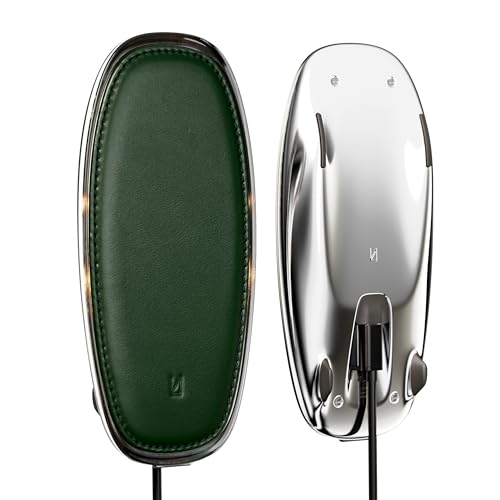
Lunar Artefacts Wireless Charger Lunar Forest Green Leather Chrome Magnetic Charging Pad

World-Class Certification: Awarded by 2019 CES Innovation Awards- Computer Peripherals Category. CE and FCC Certified. Features Plug-n-Play, Symbus Q 6-in-1 compact USB-C docking station like no other. No driver needed, plug in and you're ready to go.
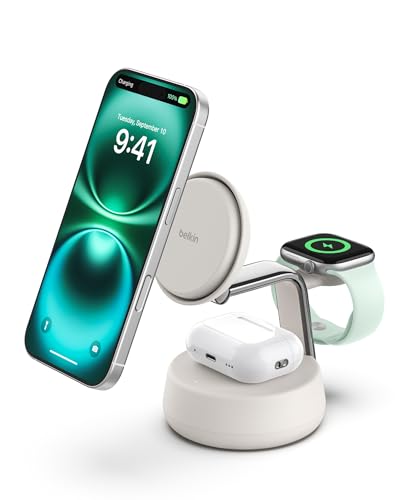
FAST CHARGE W/ THE LATEST Qi2 TECHNOLOGY: Conveniently fast charge your iPhone or Qi2 devices up to 25W on the magnetic charger. Fast charging is supported only on iOS 26 and newer, not iOS 18. MagSafe compatible for up to 5x faster wireless charging.*
Testing Methods for Wireless Charging Speed

To accurately evaluate wireless charging speed, several methods offer detailed insights into performance metrics. One effective approach involves using a high-precision ammeter to measure the current flowing into the device while evaluating a calibrated charger compliant with the Qi standard. Analyzing charging efficiency requires comparing the power output from the charger to the actual absorbed power, revealing energy losses in power transfer. Additionally, testing different positioning helps determine how minor misalignments can impact charging speeds. Employing temperature sensors is essential, as excessive heat generation during wireless charging can indicate inefficiencies that may affect battery lifespan. Finally, a data logging system with a mixed-domain oscilloscope captures real-time charging waveforms, providing valuable metrics for thorough analysis. Testing should also verify magnetic alignment stability, as proper positioning enhances both efficiency and charging performance across compatible devices.
Recommended Products

Side Table with Lamp For Your Bedroom - The Brightech Madison is a skinny 18" x 18", making it a great fit for corner or end tables, as well as nightstand tables beside your bed. The lamp is built into the table, which helps prevent it from being knocked over accidentally.

EV CHARGER LEVEL 1 MONITOR: Ensure precise monitoring and safe using with our high power watt meter, redundant current pass through capacity design

High Power USB Charger Station:This USB Charging Station provides 100W total power. Supports charging 9 devices at the same time.includes three fast charging output ports (18W Quick Charge 3.0 USB port, 20W USB type c port,2.5/5/7/10 watts smart wireless charging port), Six 12W USB charging Ports.
Measuring Charging Time From 0% to 100

Measuring the time it takes for a wireless charger to power a device from 0% to 100% involves a systematic approach. First, fully deplete a compatible device’s battery before placing it on the charging pad. It is crucial to note the time required to reach a full charge while regularly monitoring the device’s charging status.
Charging speeds can vary greatly; high-power wireless chargers can deliver up to 15W, offering faster charging times compared to lower wattage options. Environmental factors, like temperature and surface material, also impact charging time. Conducting tests in a controlled environment improves consistency, as ideal alignment on the charging pad minimizes energy loss and enhances efficiency throughout the testing process. Fast charging pads can charge devices anywhere from 1.8X to 3X faster than standard models, making wattage compatibility a critical factor in performance testing.
Assessing Device Position and Alignment Sensitivity
When using a wireless charger, the position and alignment of the device greatly influence charging performance. Proper alignment is essential; even slight misalignments can notably reduce charging efficiency and speed, sometimes resulting in minimal or no power transfer. To achieve ideal charging speeds, users should place the device at the center of the pad, where it can draw maximum power, such as 15W.
Proximity also affects charging speed. Closer placement enhances inductive coupling, ensuring better efficiency. Advanced chargers that utilize FreePower technology accommodate various positions without alignment issues, improving overall charging speed. Experimenting with different angles and positions can help users determine the best placement to obtain peak wireless charging performance. For devices using Type C wireless receivers, maintaining case thickness under 3mm ensures optimal performance and prevents interference with the charging connection.
Monitoring Heat Generation During Charging
Effective monitoring of heat generation during wireless charging plays an imperative role in device longevity and safety. Excessive heat can lead to battery degradation and expose devices to safety risks. Accordingly, many wireless chargers incorporate temperature regulation mechanisms to prevent overheating, keeping temperatures below 40°C (104°F) during use.
Real-time monitoring heat generation is facilitated by specialized software and temperature sensors built into these systems. This guarantees charging speeds remain ideal while minimizing inefficiencies caused by excess heat. Proper device placement on the charging pad is critical, as it reduces distance and potential interference that could disrupt energy transfer and increase heat output. Advanced chargers now include overheating protection features alongside overcurrent and overvoltage safeguards to provide comprehensive safety during the charging process. Overall, effective management of heat enhances both performance and safety during wireless charging.
Recommended Products
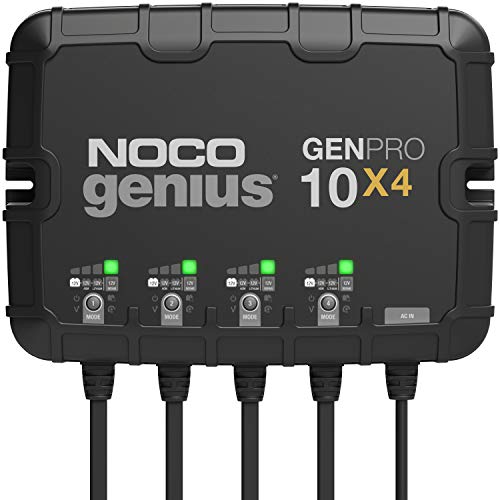
MEET THE GENPRO10X4 — 10% smaller and 33% more powerful than the GEN4. It’s our most compact and advanced onboard charger yet - engineered for peak performance in the harshest marine environments.

Unstoppable Power in Any Weather: This 12V 95Ah battery delivers 900 cold cranking amps (CCA) for reliable starts, whether it’s a freezing winter morning or a scorching summer afternoon.

THE ULTIMATE BATTERY-TO-BATTERY CHARGER: The Orion XS, engineered from the ground up, redefines DC-DC battery charging. Ideal for dual battery systems charged by (intelligent) alternators. It not only ensures top-tier performance but also guarantees the safety of your system.
Using Multiple Devices and Compatible Chargers
The performance of wireless charging systems can vary greatly based on the devices and chargers used. Testing wireless charging speeds effectively involves utilizing multiple devices supporting different charging standards, such as Qi or MagSafe. Each charger should have varying power delivery capabilities, ranging from 5W to 15W or more, to assess how this affects charging times.
Proper alignment of devices on the charger is essential; even slight misalignments can hinder charging efficiency. Additionally, keeping software updates current helps manufacturers enhance device performance and compatibility with wireless chargers. Using Qi-certified and compatible chargers also guarantees ideal engagement, further maximizing charging potential. MagSafe battery packs typically offer 15W wireless charging speeds, making them a reliable benchmark for testing fast wireless charging performance across compatible iPhone models. By controlling these factors, accurate comparisons of wireless charging speeds can be achieved.
Recommended Products

Intel Core i3-1220P processor with pre-installed DDR4 8GB RAM, M.2 128G NVMe SSD, WiFi 6E, Thunderbolt4, MicroSD Card Reader, VESA Mount, and Chrome OS
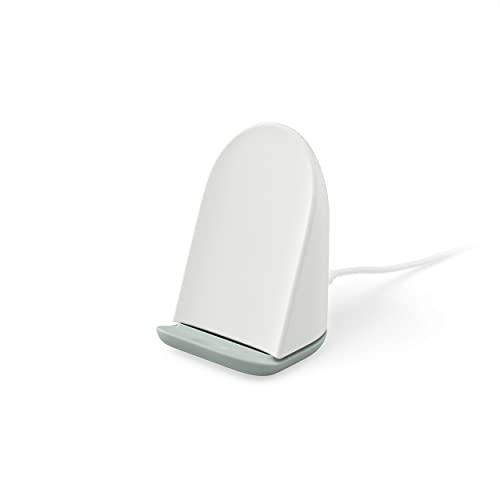
Google Pixel Stand (2nd gen) can wirelessly charge Pixel 6, Pixel 6 Pro, Pixel 7 and Pixel 7 Pro with the same power you’d get from a wired charger; just set your Pixel down and power up, phone case and all.Compatible devices:Cellular_phones.Special Feature:Wireless Charger.Input voltage: 120 volts

HIGH SPEED CHARGING: Equipped with Qi2, the latest in wireless charging, for a faster, safer, and more efficient charge up to 15W. High speed and MagSafe compatible for a super seamless charge. LED indicator lets you know when your devices are charging.
Analyzing Environmental Impact on Charging Speed
Although one might not realize it, environmental factors can markedly influence the performance of wireless charging. Extreme temperatures, both hot and cold, considerably affect wireless charging speeds; cold conditions slow chemical reactions, while excessive heat can harm battery health.
The perfect environment for wireless charging avoids direct sunlight and extreme temperatures, as these can hinder charging performance. In addition, material compatibility between the charging pad, device case, and device enhances energy transfer efficiency.
Testing methods in various environmental conditions reveal how crucial stability is for peak charging speeds. Placing the device directly on the charging pad promotes ideal placement, ensuring the best possible energy transfer. Maintaining the right environmental conditions is critical for an effective wireless charging experience.
Evaluating Battery Capacity and Health
Maintaining wireless charging efficiency hinges on understanding battery capacity and health. A healthy battery typically retains at least 80% of its original capacity after about 500 charging cycles. Diagnostic tools available on most smartphones can help evaluate battery health, displaying the maximum capacity and any issues.
Regularly monitoring these metrics aids in ensuring ideal wireless charging performance. Lithium-ion batteries can degrade, leading to slower charging speeds caused by increased resistance. Environmental factors, such as temperature extremes and frequent fast-charging, further impact battery health, potentially reducing capacity.
To maximize efficiency, users should be mindful of these elements, fostering longer-lasting battery health and improved wireless charging performance. Just as premium watch bands require quality materials for durability and prolonged wear, smartphone batteries benefit from proper care to maintain their performance over time.
Recommended Products
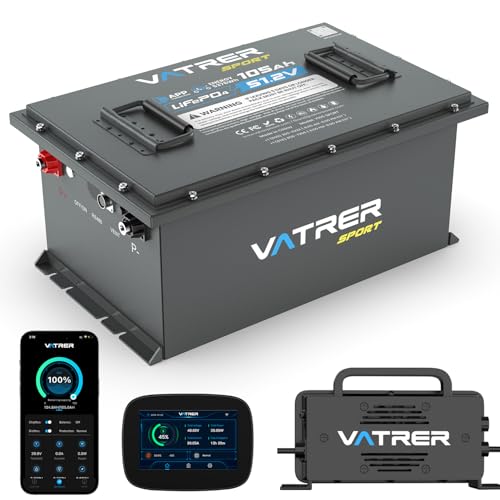
AI Intelligent Optimization & Full-Lifecycle Smart Management: 48V golf cart battery equipped with AI-powered 300A BMS, it monitors cell temperature, voltage, and current in real-time with <3% SOH(state of health)prediction error, pre-warning potential risks. Adapts charging/discharging curves to load, temperature, and driving habits, ensuring stable performance in extreme conditions. Extends cycle life to 6000+ times with 80% capacity retention.

WIRELESS FREQUENCY BAND SELECTION: Before purchasing, please ensure that the wireless frequency band you select works in your area (refer to Shure website for details > search Shure Wireless Frequency Finder).

WIRELESS FREQUENCY BAND SELECTION: Before purchasing, please ensure that the wireless frequency band you select works in your area (refer to Shure website for details > search Shure Wireless Frequency Finder).
Interpreting Test Results for Improved Charging Efficiency
Understanding test results from wireless charging efficiency assessments is important for enhancing device performance. Test results measure output power in watts against input power, with over 70% efficiency being the goal, especially at low outputs like 5W. Close examination of voltage and current readings reveals performance stability across various dynamic load responses.
Proximity between the charging pad and device noticeably affects charging speed; minor misalignments can lead to considerable efficiency losses. Additionally, environmental conditions, such as ambient temperature, play a critical role in wireless charging efficacy. Best testing utilizes precision equipment like mixed-domain oscilloscopes, enabling a thorough analysis of signal timing relationships, ultimately enhancing understanding of system performance and dynamic responses. This information is essential for improvements in wireless charging technology.
Frequently Asked Questions
How to Measure Wireless Charging Speed?
To measure wireless charging speed, one should conduct power output analysis, assess charger compatibility testing, and evaluate phone case impact. Monitoring device temperature and ensuring ideal charging pad placement enhances accuracy during charging standards comparison and user experience reviews.
What Determines Wireless Charging Speed?
Wireless charging speed is determined by charging technology, power output, device compatibility, coil alignment, charging distance, and heat management. These factors collectively influence charger efficiency and battery health while addressing standard variations across devices.
How Do I Know if My Wireless Charger Is Fast Charging?
To determine if the wireless charger is fast charging, one should assess the power output, guarantee charger compatibility with their phone model, check digital readings, and consider charging standards, battery health, and temperature effects.
How to Test How Fast Your Phone Is Charging?
To test charging speed, one should use charging apps for wattage measurement, verify phone compatibility with the charger brand, monitor temperature, and observe LED indicators on charging pads for efficient performance assessment against various power sources.