As an Amazon Associate, we earn from qualifying purchases. Some links on this site are affiliate links at no extra cost to you. Our recommendations are based on thorough research and editorial judgment.


Temperature Control Systems in Wireless Chargers

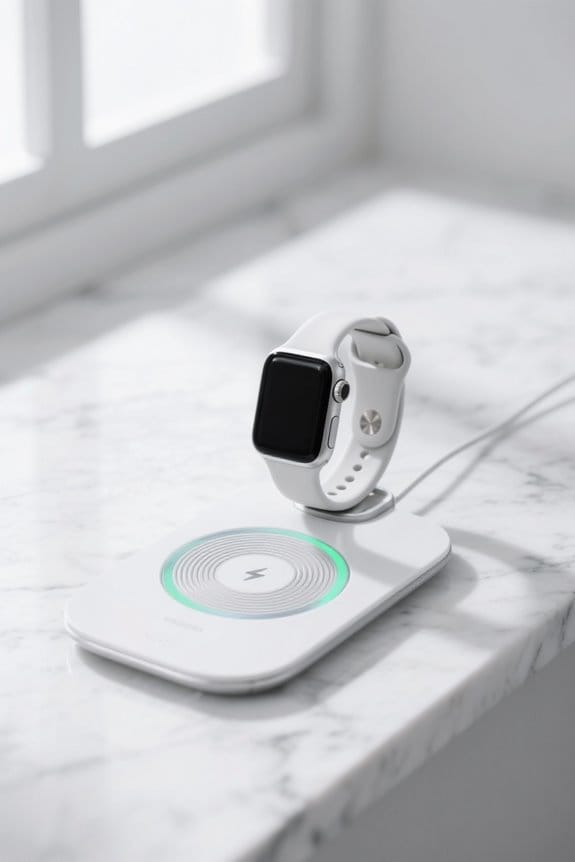
Temperature control systems in wireless chargers play an essential role in managing heat. Heat generation arises from resistance in coils and inefficiencies during energy transfer. Proper thermal management enhances charging efficiency while prolonging battery life. Materials like aluminum heat sinks and graphene thermal pads can improve heat dissipation. Additionally, advanced technologies help regulate temperature throughout the charging process. Understanding these systems can lead to safer and more efficient charging experiences. More insights are available on optimizing wireless charging features.
Key Takeaways
- Temperature control systems in wireless chargers use intelligent technologies to monitor and regulate heat during charging cycles.
- Advanced cooling methods, such as aluminum heat sinks and ceramic housings, improve thermal management and heat dissipation.
- Smart charging protocols adjust power output to minimize excessive heat during operation and maintain optimal performance.
- Integration of graphene thermal pads enhances thermal conduction and absorption, reducing the overall temperature of the charger.
- Quality chargers implement safety mechanisms that prevent overheating by shutting down or throttling performance at critical temperature thresholds.
What Causes Heat in Wireless Chargers?
You may be interested


Wireless chargers often generate heat due to several key factors related to their operational design. The resistance in charging coils leads to thermal energy generation during operation, greatly impacting the overall efficiency. Additionally, energy loss during electromagnetic power transfer contributes to this heat build-up, making charging performance less effective.
Inefficiencies in power conversion circuits elevate temperatures, further reducing efficiency. Misalignment between the phone and charger can also exacerbate heat production, as improper energy transfer wastes additional power. Key contributors include:
- Heating of copper coils
- Resistive losses in control circuits
These factors highlight the intricate relationship between thermal energy generation and effective power transfer in wireless charging systems. Modern wireless chargers incorporate Foreign Object Detection technology to prevent overheating by alerting users when metal objects are detected between the phone and charging surface. Understanding these causes is crucial for improving charging performance.
Recommended Products

Fast, Targeted Relief - The Hyperice Venom 2 Back combines advanced HyperHeat technology with vibration to deliver fast, even heating across your back. Heats up to 6x faster than standard heating pads for near-instant relief from soreness, stiffness, and tension.

Trusted Hyper Bright: Employ top-notch P8/5W LED chips, total 210 watts per light, with lighting performance 21260LM/PC, 7260Lux@10Meters, 1Lux@852Meters (2795FT). Features a trusted ultra-bright, high-intensity, stable light output. Improves driving safety with a clearer, wider, and further visual area. Lifespan extends over 50,000 hours
How Does Heat Impact Wireless Charging Efficiency?

How might excessive heat during wireless charging affect efficiency? High temperatures during charging can reduce overall charging speed because energy converts to wasted thermal energy. When temperatures rise above 35–40°C, the performance of the charger is throttled, resulting in slower power transfer.
The inefficiencies of induction energy transfer typically generate more heat than wired charging, which can affect battery health. Additionally, misalignment between the smartphone and charger exacerbates heat generation, further diminishing performance.
Moreover, prolonged exposure to increased temperatures can accelerate lithium-ion battery degradation, leading to a significant loss of capacity. Consequently, maintaining ideal thermal performance is essential for effective wireless charging and preserving the longevity of devices. Quality wireless chargers incorporate built-in protections against overheating to help regulate temperature and maintain optimal charging conditions.
Why Do Wireless Chargers Get Hotter Than Wired Ones?

Why do wireless chargers tend to generate more heat compared to their wired counterparts? This increased heat primarily stems from energy losses during electromagnetic induction, where the conversion of electrical energy produces thermal energy. In wireless charging solutions, resistance in the charging coils further contributes to heat generation, with higher resistance leading to elevated thermal output.
Additionally, distance and alignment between the device and charger amplify inefficiencies, resulting in more heat production. Unlike wired chargers, which transfer power directly, wireless systems face electromagnetic losses and coil resistance that worsen thermal issues. Advanced cooling methods may help mitigate these effects, but managing heat remains essential to maintain peak performance and protect battery health during charging. Proper thermal management is especially critical for devices with continuous 24/7 monitoring capabilities, as sustained heat exposure can degrade internal components and reduce overall device longevity.
Recommended Products
[COMFORT FOR ADULTS] Designed for fully grown adults seeking ergonomic support during movies gaming and everyday relaxation, this heavy duty recliner chair provides exceptional comfort and stability. The extended 70 inch recline depth promotes head to toe relaxation while supporting up to 350 lbs per seat. Whether used as home theater seating a living room chair or a lounge chair this power recliner loveseat delivers comfort beyond a traditional couch or loveseat sofa.
The Seatcraft experience is where craftsmanship meets functionality. Engineered for unparalleled quality and ergonomic comfort. Sit with us and experience the decades of mastery and passion we’ve put into our seats. Don’t settle for less.

UPGRADED HOME THEATER SEATING - This faux leather power reclining sofa offers the look of leather at a scaled-down price, perfect for modern couches for living room spaces
Which Materials Improve Thermal Performance in Wireless Chargers?

In addressing the heat management issues identified with wireless chargers, specific materials can greatly enhance thermal performance. Aluminum heat sinks are commonly employed for effective heat dissipation, maximizing thermal management during operation. Ceramic housings outperform plastic by providing better insulation and heat resistance, ensuring heat does not accumulate near sensitive components. Additionally, graphene thermal pads are utilized for their excellent heat absorption and conduction abilities, elevating overall thermal performance. High-quality copper coils, characterized by low resistance, are essential to reduce resistive losses, consequently minimizing heat buildup. Advanced wireless chargers incorporate Intelligent Protect Technology that works alongside these materials to monitor and regulate temperature throughout the charging process. Collectively, these materials play an important role in improving thermal efficiency, ensuring wireless chargers operate effectively without overheating during use.
Recommended Products

Graphene Heating for Superior Comfort: Our jacket utilizes advanced graphene heating panels, delivering safer, more consistent warmth compared to traditional heating wires. Not only does it keep you cozy, but the far-infrared waves also promote circulation, providing a soothing, wellness-enhancing experience.

Graphene Heating for Superior Comfort: Our jacket utilizes advanced graphene heating panels, delivering safer, more consistent warmth compared to traditional heating wires. Not only does it keep you cozy, but the far-infrared waves also promote circulation, providing a soothing, wellness-enhancing experience.

Slim and Portable: At just 0.58 × 2.78 × 4.09 inches, this 10,000mAh Anker power bank delivers exceptional portability without compromising on power capacity. It can offer up to 1.8 charges for an iPhone 15 Pro.
Can GaN Technology Improve Wireless Charger Thermal Efficiency?

Can GaN technology be the key to improving thermal efficiency in wireless chargers? GaN, or Gallium Nitride, enhances charging efficiency by enabling higher power densities while generating less heat during power conversion. This technology features lower resistance compared to silicon-based devices, minimizing energy losses and heat buildup. Combined with temperature monitoring systems that track conditions millions of times per day, GaN-powered chargers can maintain optimal thermal performance while protecting device battery health.
Recommended Products

FAST 16” OLED QHD+ 240Hz DISPLAY — Truly designed for the competitive gamer with 0.2 ms response time, featuring a VESA ClearMR 11000 rating and DisplayHDR 500 certified to ensure minimal blurring and vivid colors (1M:1 contrast ration and 100% DCI-P3)

【Immersive 17.3-Inch Full HD Display】Boasting an expansive 17.3-inch Full HD screen, this display delivers ample workspace for seamless multitasking—ideal for managing complex spreadsheets, attending virtual lectures, or streaming your favorite shows. Its larger viewing area boosts productivity for study and work while elevating your entertainment experience.

【Immersive Large-Screen Visual Experience】Featuring a spacious 17.3-inch Full HD display, this laptop provides an expansive workspace that enhances productivity for spreadsheet management, online learning, and multimedia entertainment, delivering crisp details and comfortable viewing.
How Do Smartphones Manage Wireless Charging Heat?
Managing heat during wireless charging is essential for smartphone performance and battery longevity. Smartphones utilize built-in temperature sensors to monitor thermal conditions, ensuring effective thermal management. When internal temperatures exceed 37-40°C, the device adjusts charging rates to prevent overheating, allowing for optimized power transfer.
Additionally, many smartphones incorporate cooling mechanisms such as aluminum heat sinks and ceramic housings to enhance heat dissipation. Protection circuits are also designed to stop or throttle charging when temperatures approach critical levels, thereby safeguarding lithium-ion batteries.
The effectiveness of these measures can vary between different brands and models, as each design influences overall thermal management based on receiver configurations and ambient conditions. Many 15W wireless chargers complement these smartphone systems by incorporating cooling vents and compact designs that help maintain optimal charging temperatures during fast charging sessions.
What Are the Safety Risks of Thermal Issues in Wireless Charging?
When wireless chargers generate excessive heat, significant safety risks emerge that can threaten both device functionality and user safety. Thermal buildup may lead to battery degradation, affecting the lifespan of lithium-ion batteries. When temperatures exceed important thresholds of 37-40°C, devices can trigger safety mechanisms, causing shutdowns or failure to charge.
Inadequate thermal management increases the chance of thermal runaway, which can result in battery swelling, leaks, or even fires. Advanced thermal management strategies, employing high-quality materials and efficient designs, are essential for minimizing such risks. Quality wireless chargers incorporate overnight charging safety features that protect devices during extended charging sessions and prevent overheating. Without proper precautions, users may face harmful overheating incidents, making effective thermal control fundamental for safe wireless charging experiences.
Recommended Products

PVC Hand-held card counter for cards of size 15 mil and up.

【Advanced AMD Octa-Core Processing Power】Experience exceptional performance with the AMD Ryzen 7 7735HS processor (8 cores, 16 threads) and Radeon 680M graphics. It handles demanding business software, multimedia editing, and casual gaming with outstanding efficiency and speed.

【Advanced AMD Octa-Core Processing Power】Experience exceptional performance with the AMD Ryzen 7 7735HS processor (8 cores, 16 threads) and Radeon 680M graphics. It handles demanding business software, multimedia editing, and casual gaming with outstanding efficiency and speed.
Frequently Asked Questions
How to Reduce Heat in Wireless Charging?
To dramatically reduce heat in wireless charging, innovative heat dissipation techniques and advanced cooling materials are essential. Employing efficient designs considerably enhances charging efficiency, transforming mere power transfer into a remarkably cool experience for devices.
Does Temperature Affect Wireless Charging?
Temperature considerably affects wireless charging by influencing charging efficiency and battery longevity. Effective heat management strategies are essential to mitigate excessive heat, ensuring ideal power transfer and prolonging battery life during the wireless charging process.
What Is the Temperature Range for Wireless Charging?
The ideal temperature range for wireless charging lies between 30°C and 40°C. Maintaining this range guarantees optimal charging efficiency, promotes effective heat dissipation, and supports proper thermal management—critical for safeguarding battery longevity and performance.
Why Does the Magsafe Charger Get so Hot?
MagSafe overheating causes include energy loss from misalignment and high-speed charging. Effective MagSafe heat management and wireless charger cooling techniques, such as using quality materials and throttling charge rates, are essential to prevent excessive heat buildup.