As an Amazon Associate, we earn from qualifying purchases. Some links on this site are affiliate links at no extra cost to you. Our recommendations are based on thorough research and editorial judgment.


Overcurrent and Overvoltage Protection in Qi Chargers

Overcurrent and overvoltage protection are essential in Qi chargers, ensuring safe and efficient charging. Overcurrent protection (OCP) prevents excessive current from damaging devices, adjusting based on charging protocols, while overvoltage protection (OVP) safeguards against harmful voltage surges. Together, these systems maintain ideal charging conditions and enhance user safety. Additional features like foreign object detection further improve protection. Understanding these mechanisms helps users choose safer charging options, paving the way for more information on other protective technologies.
Key Takeaways
- Qi chargers utilize overcurrent protection (OCP) to prevent excessive current from damaging devices and causing overheating during charging.
- Overvoltage protection (OVP) activates when voltage exceeds normal levels, safeguarding sensitive electronics from potential damage due to voltage surges.
- Dynamic threshold systems in Qi chargers adjust current flow based on charging protocols, enhancing safety through effective OCP management.
- Foreign object detection systems in Qi chargers identify incompatible items, adding an extra layer of safety during the wireless charging process.
- Compliance with safety standards like those from the Wireless Power Consortium ensures Qi chargers are rigorously tested for OCP and OVP effectiveness.
Understanding Overcurrent Protection in Qi Chargers
You may be interested


When a Qi charger operates, it is crucial to manage the amount of current flowing through it. Overcurrent protection (OCP) serves as a significant safety mechanism, preventing excessive current that could damage the devices being charged. High-quality Qi chargers utilize dynamic threshold systems to monitor current flow and adjust power output accordingly.
Key components of OCP include smart integrated circuits (ICs) and resettable fuses (PPTC), which respond automatically to current spikes. These devices safeguard both the charger and battery, minimizing risks such as overheating or fire hazards. Additionally, communication between the charger and the device plays an essential role, detecting power discrepancies and halting transmission during misalignments or compatibility issues. Many modern wireless chargers also incorporate foreign object detection to identify metal objects or incompatible items on the charging pad, which could interfere with safe power transfer.
The Importance of Overvoltage Protection

Overvoltage protection (OVP) is an important safety feature in Qi chargers, serving to prevent potential damage caused by unexpected voltage surges. These surges can happen due to faults or external influences, making OVP essential for the integrity of connected devices. This hardware-based protection activates automatically when voltage exceeds normal operating conditions, ensuring thorough protection during the charging process.
In addition to safeguarding devices, effective overvoltage protection helps maintain compliance with safety certification standards. This is key for operating safely while charging. Moreover, calibrated protection mechanisms in Qi chargers enhance safety and efficiency by preventing overheating and circuit failure, thereby contributing to the charger’s reliability and longevity. Many manufacturers also provide warranty and support options to ensure customer confidence in the protective features of their charging products.
How Overcurrent and Overvoltage Protection Work Together
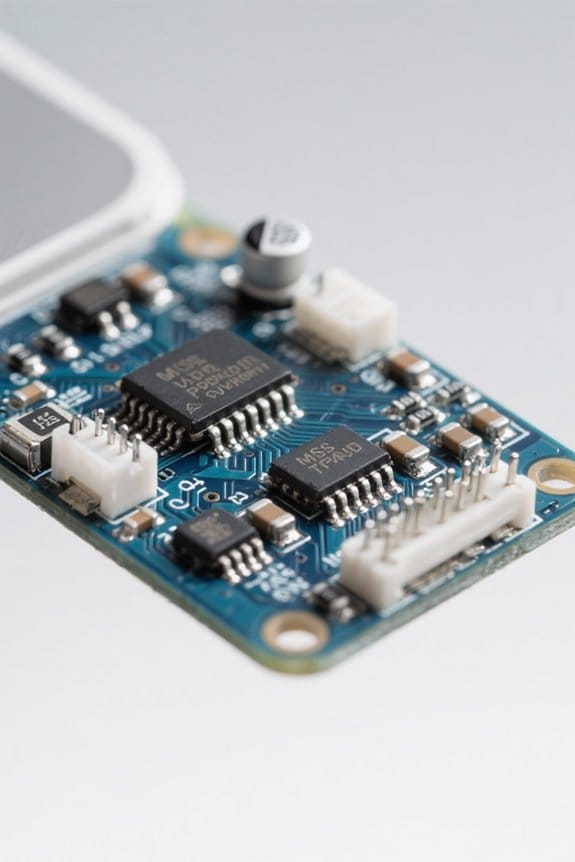
In modern Qi chargers, overcurrent and overvoltage protection collaborate seamlessly to enhance charging safety and reliability. Overcurrent protection adjusts the current flow based on specific charging protocols, ensuring that devices are not subjected to damaging levels of current. This dynamic adjustment prevents overheating and potential harm to both the charger and the device. Meanwhile, overvoltage protection acts as a critical safety mechanism, engaging during abnormal conditions to block excessive voltage from reaching the device. Together, these protective features continuously monitor power transmission, ensuring only compatible devices receive power, thereby greatly improving overall charging safety. The calibration of these systems during production reinforces their effectiveness, leading to reliable performance and peace of mind for users. Advanced Qi chargers also incorporate foreign object detection to prevent charging when metallic objects are present between the charger and device, adding another layer of safety to the wireless charging experience.
The Consequences of Lack of Protection

Even though many devices utilize advanced technology, the absence of overcurrent and overvoltage protection can have significant repercussions. Without overcurrent protection, devices may experience excessive current during charging, leading to overheating and potential battery failure. Overvoltage protection is equally essential; its absence increases the risk of damaging sensitive electronic circuits, resulting in malfunctions or complete failure of the device.
These inadequate protection mechanisms can also create serious safety hazards. For example, devices might spark, catch fire, or even explode if exposed to extreme current or voltage conditions. Furthermore, devices lacking these protections face a greater risk of permanent damage, ultimately reducing their lifespan and compromising user safety. Regulatory standards emphasize the necessity of such protections to prevent hazardous situations. Modern wireless chargers incorporate Intelligent Protect Technology with temperature control and surge protection to safeguard devices against these electrical hazards.
Recommended Products
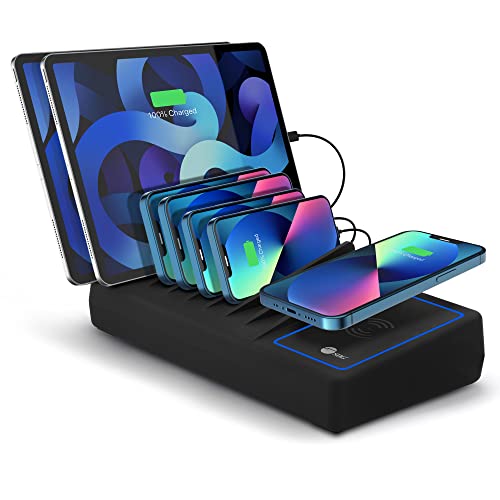
CHARGE AND ORGANIZE: With 6x USB-A and 4x USB-C ports, power and charge 10 electronic devices simultaneously while keeping your desk clean and clutter free. USB cables are NOT included.

【7-in-1 Fast Wireless Charging for Multiple Devices】Charge 2 phones, Apple Watch, and AirPods simultaneously with our upgraded 30W wireless charging station. Built for busy families and multi-device users, it eliminates cable clutter while delivering stable and fast wireless charging for iPhone 17/16/15/14/13 Pro Max and all Qi-enabled phones.

[FOR PORSCHE PANAMERA PERFECT WIRELESS CHARGING ACCESSORY] - New Upgrade Car Wireless Charger is newest customized design for Porsche Panamera 2017 2018 2019 2020 2021 2022 2023 All Models. you can take advantage of the wireless charging function in your car with it is a must-have upgrade accessory to NEW Panamera interior. Fit for the original car center console of all (2017-2023) Porsche Panamera Executive Sport Turismo Turbo S E-Hybrid perfectly.
Key Features of Qi Chargers With Safety Protections

The safety features integrated into Qi chargers play a vital role in preventing damage and guaranteeing user confidence. Qi chargers utilize overcurrent protection, which adjusts dynamically to prevent excessive current flow during operation. Additionally, overvoltage protection activates safety measures in response to abnormal conditions, such as the presence of foreign objects.
A significant safety feature is foreign object detection, which initiates power transmission exclusively to compatible devices, shutting off power to any detected foreign entities on the charging pad. Continuous monitoring of current flow enhances overall safety and performance, effectively managing both overcurrent and overvoltage situations. Many modern wireless chargers also incorporate cooling systems to maintain optimal charging temperatures and prevent overheating during extended use. These mechanisms collectively guarantee reliable, safe charging experiences while achieving efficient charging speeds.
Recommended Products

🌞【Powerful 12000W Off-Grid Inverter – Split Phase 120V/240V Output】The CAMINI 8KW pure sine wave inverter delivers up to 36,000W surge power for 20 seconds. This 48V split-phase inverter converts DC 48V to AC 120V/240V with selectable 50Hz/60Hz. Ideal for off-grid solar systems, home backup, and hybrid power setups, ensuring stable performance for heavy-duty appliances.

[PERFECT ACCESSORY FIT FOR NEW TOYOTA SIENNA] - This car wireless charger is specially designed suitable for Toyota Sienna 2021 2022 2023. A MUST HAVE 4th Gen Toyota Sienna interior accessory. Get rid of cables in your car! you can take advantage of the wireless charging function in your car. Focus on Driving. This is also a wonderful gift choice for New Sienna owners.
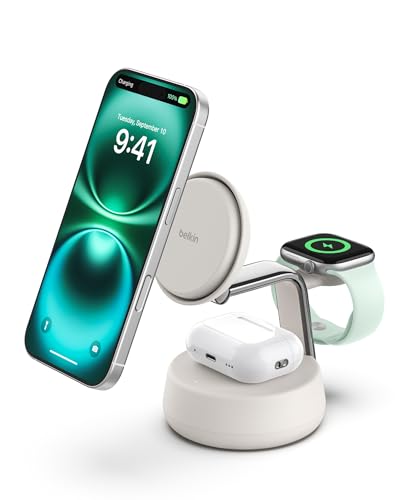
FAST CHARGE W/ THE LATEST Qi2 TECHNOLOGY: Conveniently fast charge your iPhone or Qi2 devices up to 25W on the magnetic charger. Fast charging is supported only on iOS 26 and newer, not iOS 18. MagSafe compatible for up to 5x faster wireless charging.*
Benefits of Overcurrent and Overvoltage Protection
When both overcurrent and overvoltage protections are employed, users can enjoy safer charging experiences. Overcurrent protection dynamically adjusts and monitors the current flow in Qi chargers, ensuring it remains below a safe level, thereby preventing potential damage from excessive current. Similarly, overvoltage protection activates safety measures under abnormal conditions, protecting devices against damaging voltage spikes.
These protective features not only enhance safety, but they also improve charging speed by optimizing power delivery. By offering real-time feedback on power discrepancies, chargers can cease operation to incompatible devices, further promoting safety. Additionally, these measures maintain device battery health, preventing overheating and prolonging the lifespan of both the charger and the connected devices. Compliance with safety certification standards further reinforces reliable charging experiences. Advanced safety technologies like ActiveShield 2.0 provide continuous temperature monitoring throughout the charging process, adding an extra layer of protection against thermal risks.
Common Causes of Overcurrent and Overvoltage in Charging
Overcurrent and overvoltage issues can greatly affect charging performance and device safety. Overcurrent can occur when devices demand more power than a charger can provide, leading to overheating. This situation often arises under overload conditions, such as connecting multiple devices to one charger, which causes excessive current draw.
On the other hand, overvoltage commonly results from poor-quality chargers that lack proper regulation. Foreign objects can obstruct the charging mechanism, introducing instability. Additionally, faulty electrical wiring can supply incorrect voltage levels, risking damage. Finally, short-circuits, often caused by damaged cables, can generate sudden current surges that surpass safe operating levels. These factors highlight the need for effective protection systems in Qi chargers. Modern wireless chargers incorporate built-in protections against over-voltage, over-temperature, and short circuits to safeguard both the device and charging pad during operation.
Safety Standards and Certifications for Qi Chargers
Qi chargers operate within a framework of established safety standards, developed by the Wireless Power Consortium (WPC) to confirm safe and efficient power delivery. These standards guarantee that devices receive power levels that do not risk damage from overcurrent or overvoltage.
Qi-certified chargers undergo rigorous testing to verify their overcurrent protection and overvoltage protection mechanisms. This testing is essential for demonstrating compliance with safety certifications, including UL, CE, and FCC.
These certifications mandate that Qi chargers effectively prevent overheating and related hazards during operation. Additionally, Qi-certified chargers often incorporate built-in safety features, such as foreign object detection and thermal management systems, increasing the overall reliability of the wireless charging process. Look for certification marks indicating adherence to safety standards like FCC, CE, and ROHS to ensure your charger includes proper overheating protection and overcurrent safeguarding.
Recommended Products

[Next-Gen Qi2.2-Certified 25W Fast Charge] Unlock the fastest wireless charging for iPhone. Delivers up to 25W (iOS 26+) for iPhone 17/16 series— up to 5× faster than standard wireless chargers. iPhone 17 Pro lab test (0%): 0-56% in 27 mins. Results apply only to this model/condition. Note: Wireless fast charging follows a charging curve, faster at low battery and slowing as it fills to protect battery health. (iPhone 12–15: up to 15W; 17 Air: up to 20W.)

[2 in 1 Fast Charger] With the help of 30W max output range adapter and the USB C charger included, you can fast charge your phone and simultaneously charge other devices through the high-speed USB-A port rapidly. With the 2 in 1 design, no more bulky adapters or constant swapping - just plug once and enjoy clutter-free charging for all your essentials.
![LISEN 200W Car Charger USB C Fast Charge [GaN] PD 140W Fast Car Charger](https://m.media-amazon.com/images/I/41wsW3uC-JL._SL500_.jpg)
200W Max Triple-Port Fast Car Charger | Power all your devices at once — USB-C1 delivers up to 140W for laptops, USB-C2 provides 30W for phones, and USB-A adds 30W for tablets. Total intelligent output up to 170W for 3 devices simultaneously.
Future Developments in Charger Safety Features
As technology advances, the future of charger safety features promises significant enhancements in overcurrent and overvoltage protection. Emerging standards, such as the WPC’s Ki Cordless Kitchen, focus on integrating intelligent safety mechanisms that adapt to various appliances, thereby preventing electrical overloads. Innovations in materials will improve heat dissipation and lead to more responsive fault detection systems, mitigating risks linked to overcurrent incidents.
Additionally, the incorporation of machine learning algorithms is expected to refine safety responses in real time, allowing Qi chargers to adjust power delivery based on device requirements and environmental factors. These advancements will be supported by enhanced safety certifications, which will include rigorous testing to guarantee new designs withstand extreme conditions without compromising safety thresholds. Similar to how premium materials like leather ensure durability in wearable accessories, advanced charging systems will prioritize high-quality components to maintain longevity and reliable performance under various operating conditions.
Choosing the Right Qi Charger With Protection Mechanisms
Selecting the right charger is essential for guaranteeing not only device compatibility but also safety during the charging process. Look for Qi chargers that provide robust overcurrent protection, featuring dynamic threshold systems that adapt current based on device needs. This prevents potential damage to your devices.
Additionally, opt for chargers equipped with hardware-based overvoltage protection. This feature activates under abnormal conditions, such as when a foreign object is detected, safeguarding both your device and the charger.
Always check for safety certification, such as UL, CE, or FCC compliance. Finally, make sure the charger includes foreign object detection technology to enhance safety, making the charging process both efficient and secure. Consider chargers with temperature monitoring systems that continuously track heat levels during charging to prevent overheating and ensure consistent performance.
Recommended Products

[PERFECT WIRELESS CHARGING ACCESSORY COMPATIBLE WITH MERCEDES BENZ C-CLASS/GLC/AMG] - New Upgrade Designed Wireless Charger compatible with Mercedes-Benz C-class/C-Class AMG GLC/GLC AMG 2015 2016 2017 2018 2019 2020 2021 2022. you can take advantage of the wireless charging function in your car with it is a must-have upgrade accessory to your car interior. Never add a stupid phone holder or phone mount with long ugly cable and 100% conflict with your car interior.

[PERFECT WIRELESS CHARGING ACCESSORY COMPATIBLE WITH MERCEDES BENZ C-CLASS/GLC/AMG] - New Upgrade Designed Wireless Charger compatible with Mercedes-Benz C-class/C-Class AMG GLC/GLC AMG 2015 2016 2017 2018 2019 2020 2021 2022. you can take advantage of the wireless charging function in your car with it is a must-have upgrade accessory to your car interior. Never add a stupid phone holder or phone mount with long ugly cable and 100% conflict with your car interior.

[PERFECT ACCESSORY] - New Designed Wireless Charger for Mercedes Benz GLE-Class W167 2020-2023; Fit for Mercedes Benz GLS-Class X167 2020-2023; Fit for Mercedes Benz GLE-Coupé V167 2020-2023. A MUST HAVE New Mercedes-Benz interior accessory. Get rid of cables in your car! you can take advantage of the wireless charging function in your car. Focus on Driving. This is also a wonderful gift choice for Mercedes-Benz owners.
Frequently Asked Questions
What Is Over Voltage and Over Current Protection?
Overvoltage and overcurrent protection act like vigilant sentinels, guarding devices against voltage spikes and excessive current flows. These safety mechanisms guarantee energy efficiency and prevent catastrophic failures, showcasing their vital role in modern electronic protection.
What Is the Maximum Power for Qi Charging?
The maximum power for Qi charging standards currently reaches 15 W, with efficiency improvements enhancing power transfer. Future developments may expand this, ensuring battery safety while catering to higher-demand devices through advanced technology.
What Is Overvoltage in a Charger?
Overvoltage in a charger occurs when voltage exceeds specified limits, leading to potential component damage. Ensuring charger safety involves protection circuits that prevent overvoltage, particularly in devices utilizing Qi technology to maintain efficiency and longevity.
Can You Overcharge With Wireless Charging?
Wireless charging does not typically lead to overcharging, as integrated battery management systems regulate power flow. Ensuring charging efficiency and effective thermal regulation, these systems prevent excessive power transfer that could harm the device’s battery health.