As an Amazon Associate, we earn from qualifying purchases. Some links on this site are affiliate links at no extra cost to you. Our recommendations are based on thorough research and editorial judgment.


Ferrite Shielding in Wireless Chargers: Safety Feature

Ferrite shielding is essential for wireless chargers as it improves magnetic coupling and reduces electromagnetic interference. This enhancement boosts charging efficiency by concentrating magnetic flux, which results in safer operation. Ferrite materials, like manganese-zinc and nickel-zinc, also help prevent overheating and protect against electrical hazards. As advancements continue in ferrite technology, expect even greater efficiencies and safety enhancements for these devices. Explore further to understand how these innovations impact charging performance.
Key Takeaways
- Ferrite shielding enhances magnetic coupling, improving wireless charging efficiency and reducing energy losses during power transfer.
- It minimizes electromagnetic interference (EMI), ensuring safer operation of wireless chargers and compliance with safety standards.
- Ferrite materials, like manganese-zinc and nickel-zinc, have high electrical resistivity, reducing eddy currents and preventing overheating.
- The shielding reduces magnetic field leakage, contributing to user safety and reliability in wearable devices during charging.
- Future advancements focus on developing more efficient ferrite cores to enhance safety features and operational reliability in wireless charging systems.
Importance of Ferrite Shielding
You may be interested



When discussing the effectiveness of wireless chargers, the importance of ferrite shielding cannot be overlooked. Ferrite shielding enhances magnetic coupling between the transmitter and receiver coils, which greatly improves charging efficiency. By effectively concentrating magnetic flux, ferrite materials minimize electromagnetic interference (EMI) during power transfer. This leads to safer operation by reducing magnetic field leakage, ensuring compliance with safety standards.
Furthermore, optimizing ferrite thickness is essential; research shows increasing ferrite shielding can enhance coil-to-coil efficiency, reaching levels as high as 99.7360% under specific frequencies. This efficiency is critical for maintaining reliable performance under various operational conditions, including potential misalignment scenarios. Ensuring chargers are Qi-certified is important for safety, as this certification guarantees adherence to standardized electromagnetic compatibility and operational protocols. To summarize, ferrite shielding is fundamental for maximizing charging efficiency and ensuring device reliability.
Recommended Products


The information below is per-pack only

Save when you buy the 2-Pack!
Mechanism of Electromagnetic Interference Reduction
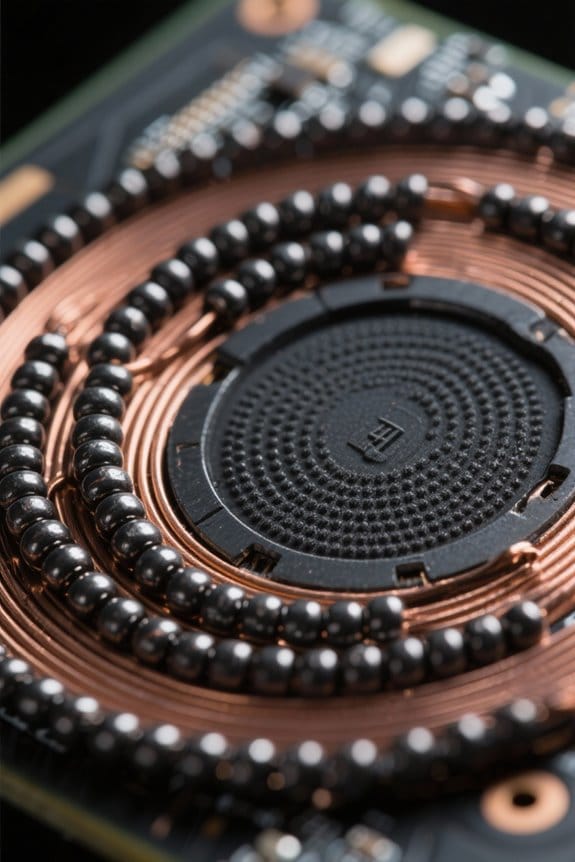
Electromagnetic interference (EMI) poses a significant challenge in wireless charging applications, but ferrite shielding offers an effective solution. Ferrite materials concentrate magnetic flux and direct it towards the coils, minimizing leakage and enhancing charging efficiency. By employing ferrites, wireless chargers can effectively operate at high frequencies, achieving coil-to-coil efficiencies between 98.88% and 99.7360% at 6.78 MHz.
Additionally, ferrites exhibit high electrical resistivity, which reduces eddy currents responsible for EMI. This reduction not only improves overall performance but also enhances user safety by creating a protective barrier that limits electromagnetic field exposure. Modern wireless chargers incorporate over-voltage protection mechanisms alongside ferrite shielding to provide comprehensive safety during charging operations. Consequently, employing ferrite shielding is essential for optimizing the safety and efficiency of wireless charging systems.
Enhancing Charging Efficiency
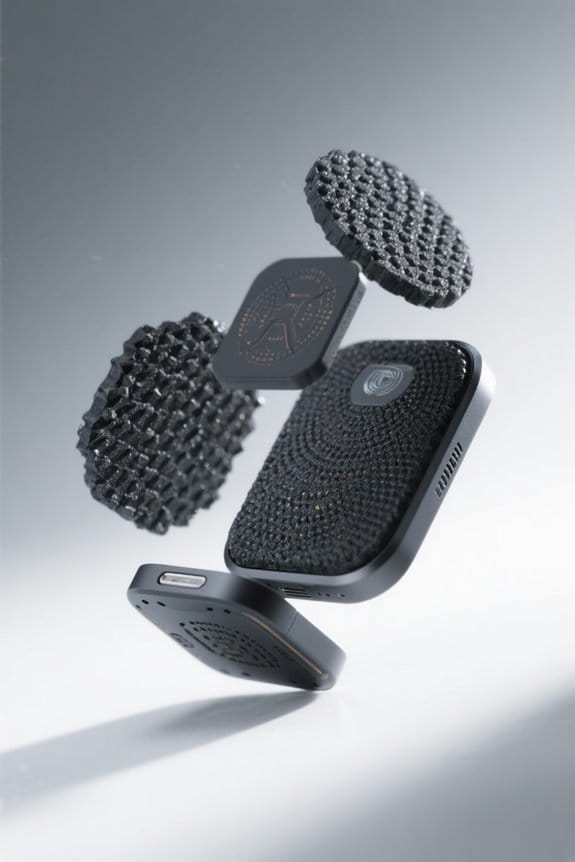
To boost charging efficiency in wireless chargers, ferrite materials play a pivotal role. These materials greatly enhance magnetic coupling, enabling coil-to-coil efficiency to reach up to 99.7360% at 6.78 MHz. By incorporating ferrite shielding, wireless charging systems effectively minimize energy losses attributed to air gaps and poor coil coupling, leading to superior power transfer.
Furthermore, tailored ferrite systems maintain high magnetic performance within size constraints, an essential aspect for electric vehicles. Effective ferrite couplers greatly reduce magnetic field leakage, bolstering overall reliability. As a result, enhanced charging efficiency allows for faster power delivery, potentially rivaling traditional wired systems, while also improving safety features against electromagnetic interference. Modern wireless chargers incorporate temperature control mechanisms alongside ferrite shielding to prevent overheating and ensure safe, efficient charging across compatible devices.
Recommended Products

Detachable and Reusable:Clip on wire and removable easily. It won't cause any distortion during signal transmission.

STABLE HIGH-SPEED TRANSMISSION: This Mini USB cable supports USB 2.0 data transfer speeds up to 480 Mbps, making it ideal for file, photo, and video transfers. The thickened tinned copper core in this USB A to Mini B cable reduces signal loss and ensures stable, efficient performance for everyday use — whether as a PS3 charging cable, dash cam power cord, or Go Pro charger.

1.Model:power transformer ferrite core
Materials Used in Ferrite Shielding

Ferrite shielding relies on specialized materials that enhance the performance of wireless chargers. Common options include manganese-zinc ferrite (MnZn) and nickel-zinc ferrite (NiZn), both known for their favorable magnetic properties. These materials offer high electrical resistivity, which notably reduces eddy current losses, promoting safety during operation.
The thickness of the ferrite shield plays an essential role; increasing the thickness can improve coupling coefficients and mutual inductance. This optimization enhances overall efficiency by directing the electromagnetic field effectively while minimizing core losses. Advances in ferrite material composition and microstructure are important for the development of future wireless chargers, ensuring they meet demanding performance requirements related to weight, volume, and magnetic efficiency. Quality chargers incorporate proper voltage regulation along with ferrite shielding to prevent overheating and ensure reliable, safe charging performance.
Recommended Products

AC DC power supply adapter for DJI transmission, high bright remote monitor, video transmitter, master wheels

Package included: 80 cable clips (with 5 different size included) for cord with 3/ 5/ 7/ 9/ 13 mm inner diameter

Filtered car DC power charger adapter PG-3J for Kenwood radio
Properties of Ferrofabric
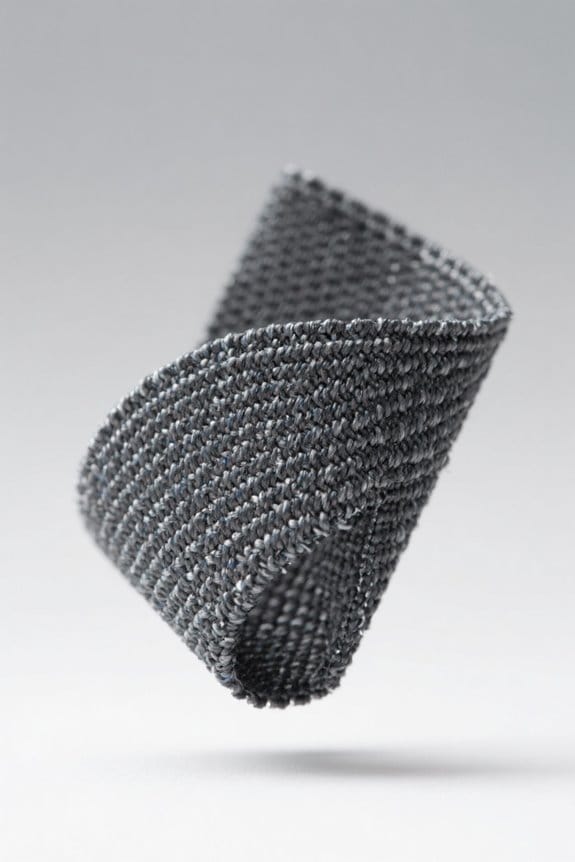
In the domain of wireless charging technology, Ferrofabric represents an innovative advance in materials usage. This stretchable magnetic fabric greatly enhances inductive coupling, improving charging efficiency by 21.7%. Made from bamboo rayon embedded with ferrofluid, it boasts a relative permeability of 11.3, making it effective in reducing magnetic leakage—a vital safety feature in wireless power transfer systems.
Ferrofabric maintains durability with effective Young’s modulus stability for up to 20 days. Its impressive stretchability of 50% allows it to conform comfortably to various surfaces while maintaining its structural integrity. By leveraging the properties of copper alongside its unique composition, Ferrofabric emerges as a key material in optimizing wireless chargers, ensuring they are safe, efficient, and enduring. Like modern wireless charging pads that incorporate overheating protection, Ferrofabric’s magnetic shielding properties contribute to preventing potential damage during the charging process.
Impact on Wearable Devices
While advancements in wireless charging technology continue to evolve, the integration of ferrite shielding greatly enhances the functionality of wearable devices. Ferrite materials effectively minimize electromagnetic interference and reduce magnetic field leakage, improving safety for both users and nearby electronics. Additionally, the use of stretchable “Ferrofabric” enhances magnetic shielding efficiency by a notable 21.7%, resulting in reliable power transfer during charging.
The wireless charging efficiency utilizing ferrite shielding can reach up to 71%, making it suitable for various wearable devices, including battery-free e-tattoo sensors. Furthermore, active and passive ferrite shielding methods have shown a 34.06% increase in shielding capability over traditional materials like aluminum, ensuring comfort without compromising safety in wearable technology. Modern wireless chargers incorporate cooling systems alongside ferrite shielding to maintain optimal charging temperatures and prevent overheating during extended use.
Safety Considerations in Wireless Charging
Safety in wireless charging systems is paramount, especially as technology becomes more integrated into everyday life. Ferrite shielding plays an essential role by reducing electromagnetic interference (EMI) and directing magnetic fields, which enhances user safety. The Qi standard outlines important safety features, including detection mechanisms that stop charging when a foreign object is placed on the charging pad.
Moreover, under normal conditions, devices consume less than 0.01W when in standby mode, which minimizes energy waste and reduces overheating risks. Ferrite materials not only improve the performance of magnetic coupling but also protect sensitive electronic components from potential damage caused by fluctuating electromagnetic fields, ensuring safer and more reliable wireless charging experiences. Modern wireless chargers incorporate overcurrent protection to prevent excessive current flow during charging, further safeguarding both the device and the charging pad from electrical damage.
Effect on Coil Inductance
The integration of ferrite shielding in wireless chargers markedly enhances coil inductance, a factor essential for efficient energy transfer. By concentrating the magnetic flux produced by the charging coils, ferrite improves the overall efficiency of wireless charging systems. This increase in coil inductance minimizes energy losses associated with air gaps and electromagnetic interference (EMI), which can otherwise disrupt the system’s performance.
Ferrite’s high magnetic permeability is also vital for optimizing inductive coupling, particularly in designs that operate at higher frequencies, such as 130 kHz. Innovations like stretchable “Ferrofabric” have demonstrated a 21.7% increase in coil inductance due to superior magnetic properties, showcasing the potential for advanced charging systems to enhance energy transfer efficiency remarkably.
Recommended Products

STRONG PRACTICALITY:Can reduce EMI and RFI on AC power lines, suitable for noise cancellation on USB, coaxial cables, power lines, firewire, audio, video cables, etc.
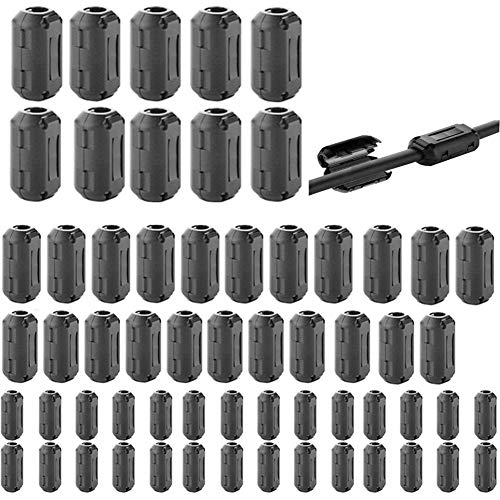
Package included: 60 * cable clips (with 5 different size included) for cord with 3/ 5/ 7/ 9/ 13 mm inner diameter

Product Material: Ni-Zn ferrite. It can improve the electromagnetic field around the solenoid, thus avoiding outside interference.
Future of Ferrite Technology in Wireless Chargers
As advancements in ferrite technology continue to emerge, they promise significant improvements in wireless charging systems. Future developments will enhance ferrite materials to boost magnetic coupling, leading to greater charging efficiency, especially in dynamic wireless charging for electric vehicles. Innovations focus on optimizing material composition and microstructure, aiming to reduce size and weight constraints critical for automotive applications.
Additionally, researchers are developing ferrite cores that can withstand operational stress, addressing issues of power loss and thermal performance. Enhanced magnetic performance could also improve electromagnetic shielding, ensuring safe power transfer in both wearable and portable charging applications. These advances complement existing safety measures like temperature monitoring systems that continuously track device heat levels during charging. This commitment to refining ferrite technology is paving the way for more efficient wireless charging solutions in the future.
Summary of Benefits and Applications
While exploring the capabilities of ferrite shielding in wireless chargers, it becomes evident that these materials greatly enhance energy transfer efficiency. Ferrite shielding improves magnetic coupling, resulting in outstanding coil-to-coil efficiency rates between 98.88% and 99.7360% at 6.78 MHz.
Furthermore, these solutions effectively mitigate electromagnetic interference, ensuring a stable magnetic field during operation. The incorporation of ferrite layers provides significant safety features, such as overheating prevention, which reduces the risk of electrical hazards.
These advancements are particularly beneficial for wearable devices, where compactness and efficiency are imperative. Modern wireless chargers often include temperature control features as an essential safety measure to prevent overheating during charging sessions. Overall, ferrite shielding represents an important development in wiring charging solutions, optimizing performance while minimizing size and weight.
Frequently Asked Questions
What Are the Safety Features of Wireless Chargers?
Wireless chargers incorporate safety features such as electromagnetic compatibility, heat management, and device protection. By adhering to safety standards and enhancing charger efficiency, they promote battery longevity, user ergonomics, and maintain wireless security against harmful electromagnetic fields.
Does RFID Blocking Interfere With Wireless Charging?
RFID blocking profoundly disrupts wireless charging, provoking charging efficiency concerns and severe compatibility impacts. Device interference issues amplify signal strength variations, necessitating meticulous charger placement. User convenience factors dwindle, challenging safety standards compliance amidst evolving industry regulations and future advancements predictions.
Is It Safe to Sleep Next to a Wireless Charger?
Sleeping next to wireless chargers is generally considered safe due to low electromagnetic fields and radiation levels. Adhering to user guidelines, maintaining a sleep distance, and understanding charger materials further enhances health and charging safety.
Which Wireless Phone Charger Blocks EMF Radiation?
Amid rising health concerns, certain wireless phone chargers effectively block EMF radiation through advanced ferrite materials. Product reviews highlight their shielding mechanisms and charger design, ensuring consumer safety against electromagnetic fields prevalent in wireless technology.