As an Amazon Associate, we earn from qualifying purchases. Some links on this site are affiliate links at no extra cost to you. Our recommendations are based on thorough research and editorial judgment.


Understanding Charging Sweet Spots on Wireless Pads

To maximize charging efficiency on wireless pads, identifying the sweet spot is essential. This sweet spot typically lies in the lower third of the device’s back. Precise coil alignment is necessary; misalignment can lead to slower charging or failure. Using multi-coil chargers, visual aids, and compatible cases can enhance performance. Opting for chargers with at least a 2-amp power supply also benefits charging speed. Explore further to discover tips for optimizing your wireless charging experience.
Key Takeaways
- The sweet spot for wireless charging is usually located in the lower third of the device’s back.
- Misalignment can significantly reduce charging efficiency, leading to slower charging or failure.
- Using a three-coil charger can enhance alignment flexibility compared to a single-coil option.
- Visual aids or apps help users identify the sweet spot more easily for effective charging.
- Ensure a power supply of at least 2 amps to improve overall wireless charging efficiency.
The Importance of Charging Alignment
You may be interested


Wireless charging technology relies heavily on the precise alignment of coils. For efficient energy transfer, the receiver coil in a smartphone must align perfectly with the transmitter coil on the charging pad. Under the Qi standard, this ideal alignment identifies the “sweet spot,” often found on the lower one-third of the device’s back.
Misalignment can considerably reduce charging efficiency, causing slower speeds or even failure to charge. Users may find themselves repositioning their devices multiple times to achieve the correct charging alignment. Additionally, three-coil chargers improve flexibility in alignment compared to single-coil options, enhancing overall charging performance. Visual aids or apps can further assist users in quickly locating this essential sweet spot for a seamless charging experience. Modern magnetic wireless chargers solve this alignment challenge through magnetic alignment technology, which automatically positions devices at the optimal sweet spot for consistent charging performance.
Identifying the Sweet Spot for Your Device

Identifying the sweet spot for a device involves understanding its unique charging characteristics. For most phones, the Qi sweet spot is usually found in the lower third of the back, although specific locations can differ by model. Users may notice that centering their device directly on a wireless charger often does not trigger charging efficiently.
To enhance charging performance, slight adjustments in alignment may be necessary. Utilizing visual aids or positioning markers can assist in achieving ideal alignment. For improved efficiency, the use of three-coil chargers is recommended, along with a power supply of at least 2 amps. Similar to how adjustable band lengths ensure optimal fit and performance across various smartwatch models, proper alignment is crucial for wireless charging success. Ultimately, many charging issues stem from misalignment rather than hardware failure.
Recommended Products

【PRECISE DESIGN】Used anti-slip material to prevent your phone from falling out while driving. A thinner lip at the bottom to avoid your phone falling off and allows more...
Common Misalignments and Their Impact

When a device is not precisely aligned on a wireless charging pad, it can lead to significant charging inefficiencies. Misalignment affects the connection between the device’s coil and the charging pad’s coil, drastically reducing charging capacity. Many devices, like the BlackBerry PRIV, have specific “sweet spots” near the lower third of their backs, making experimentation necessary for ideal charging performance.
Small deviations in device positioning can inhibit effective inductive charging. Users might find themselves repeatedly adjusting their phones to achieve the correct alignment. Although some advanced wireless charging technologies feature multiple coils to mitigate misalignment issues, clear visual indicators remain scarce, often leading to frustration for those charging their phones. Modern solutions like magnetic alignment help ensure stable positioning and eliminate the guesswork of finding the optimal charging spot.
Recommended Products

GL722 Dual Grade Laser for long range, high accuracy elevation control; Automatic self-leveling, advanced radio remote, grade matching, Planelok, and automatic axis alignment allow quick and accurate set-ups for any fine grading or major construction project
Advanced EMS Technology: The EMS electro-magnetic system allows for 25 precise speed level adjustments, catering to both high- and low-intensity workouts for a customizable fitness experience

#1 Dentist recommended oral b io: This Oral-B Braun electric toothbrush removes up to 100 %* more plaque in just 1 week; these bristles are clinically proven to remove up to 2x healthier gums vs manual brush
Tips for Enhancing Charging Efficiency

Achieving ideal charging efficiency requires careful attention to several key factors. Proper alignment between your smartphone’s Qi coil and the charging pad is essential; ideally, place the device towards the designated sweet spot, often found at the lower third of the back. Experiment with various charging pads, particularly those featuring multiple coils, to optimize charging performance by broadening the alignment area.
Using a Qi-compatible case that is not excessively thick can enhance charging efficiency, as thicker cases may hinder the process. Visual markers or sound cues can assist in achieving correct alignment, ensuring consistent results. Finally, select a wireless charger equipped with at least a 2-amp power supply to facilitate efficient energy transfer and enhanced charging speeds. Just as quick adaptability enhances the versatility of designer watch bands across different occasions, maintaining flexibility in your charging setup by testing different pad positions can help you find the optimal configuration for your specific device.
Recommended Products

【Fast Charging Station】With a single USB-C port delivering up to 65W of power, this charging stock can fully charge your laptop in just 90 minutes. Whether for work or play, this powerful cell phone charging stations ensures your device is quickly back to full power, keeping you productive and connected

From INIU — the SAFE Fast Charge Pro: Experience the safest charging with over 38 million global users. At INIU, we use only the highest-grade materials, so we do have the confidence to provide an industry-leading 3 years INIU care.

【Safe Wireless Fast Charging】:Built-in MCU and charging management IC chip with 6 protections, including over-current protection, over-voltage protection, over-heat protection, over-power protection, under-voltage protection, short-circuit protection
Aftermarket Solutions and Compatibility Considerations

The variety of aftermarket wireless chargers presents both opportunities and challenges for ideal charging. These chargers often require precise alignment of a device’s Qi coil with the charging pad to maximize charging efficiency. Slight misalignment can lead to reduced performance.
Compatibility can vary widely, making three-coil chargers preferable for enhanced charging effectiveness and flexibility in device positioning. Users may need to experiment with different charging pads, as models like the Tylt Vue and Samsung show differing results.
To improve alignment, visual aids or markers can guide users to the best charging sweet spot. Additionally, utilizing a power supply of at least 2 amps is essential for ensuring efficient charging performance, preventing slow charging or failure to charge altogether. Many wireless chargers now feature magnetic alignment technology that automatically positions devices in the optimal charging spot, eliminating the guesswork associated with traditional Qi pads.
Recommended Products
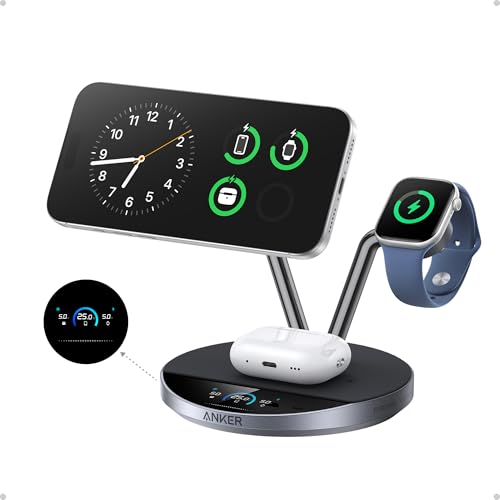
Charge at the Ultra‑Fast Wireless Standard Available: Powered by 25W Qi2.2 ultra-fast charging, your iPhone 17 Pro charges to 50% in just 22 minutes—up to 6× faster than standard 5W wireless chargers. Enjoy the wireless speed you've been waiting for without compromising battery health. Actual performance may vary.

ADVANCED PLAQUE REMOVAL: In just 1 week, remove 100% more plaque and get 2x healthier gums with Oral-B's most advanced technology, making it a great electric toothbrush for adults.
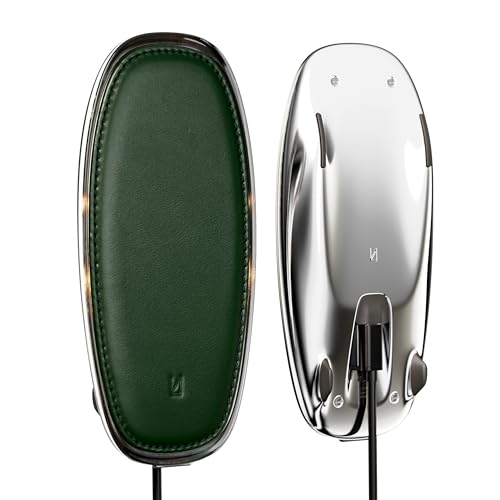
Lunar Artefacts Wireless Charger Lunar Forest Green Leather Chrome Magnetic Charging Pad
Frequently Asked Questions
What Do the Colors Mean on Samsung Wireless Charging Pad?
LED indicators symbolize charging status: red warns of misalignment or compatibility issues; blue signifies active charging; green indicates full power. These color meanings enhance user experience by reflecting device alignment and managing heat effectively during charging.
How Do I Know When My Wireless Charging Pad Is Charged?
Charging indicators on wireless pads reveal battery health and charging efficiency. Proper device compatibility guarantees effective power enhancement, while monitoring heat generation and charging distance helps confirm when the pad has reached peak performance.
Is 10W or 15W Better for Wireless Charging?
Like a racecar on a track, 15W wireless charging outpaces 10W in efficiency, offering quicker speeds. However, device compatibility and heat generation are essential; customer reviews often highlight longevity benefits in appropriate usage scenarios.
How to Use the Wireless Phone Charging Pad?
To use a wireless phone charging pad, guarantee proper pad placement, charging orientation, and device compatibility. Monitor heat management, power sources, and charging speeds while considering safety features and maintenance tips for peak performance.