As an Amazon Associate, we earn from qualifying purchases. Some links on this site are affiliate links at no extra cost to you. Our recommendations are based on thorough research and editorial judgment.


Corrosion Resistance in Metal Watch Bands

Corrosion Resistance in Metal Watch Bands
You may be interested


Corrosion resistance is crucial for metal watch bands’ durability and appearance. Materials like 316L stainless steel, which contains molybdenum, resist moisture better than 304 stainless steel. Titanium also offers excellent resistance due to its protective oxide layer. Regular maintenance, such as cleaning with mild soap, enhances these metals’ longevity. Avoid extreme exposure to harsh chemicals and seawater. Understanding these materials can help in selecting the best watch band for your needs, and more insights await.
Key Takeaways
- 316L stainless steel offers superior corrosion resistance due to its molybdenum content, making it ideal for humid environments.
- Regular maintenance with mild soap can significantly enhance the corrosion resistance of metal watch bands.
- Titanium has excellent corrosion resistance, thanks to its protective oxide layer, suitable for marine settings.
- Avoid harsh chemicals and seawater to prevent corrosion and prolong the life of your metal watch band.
- Consider materials like silicone or nylon for activities, as they minimize irritation and offer more durability than some metal options.
The Importance of Corrosion Resistance in Watch Bands

Corrosion resistance plays an essential role in the longevity and aesthetic preservation of metal watch bands. For instance, stainless steel, particularly the 316L alloy, is a preferred choice due to its enhanced durability against harsh conditions. The addition of molybdenum in 316L provides exceptional protection, making it an ideal material for everyday wear and exposure to moisture or sweat.
In contrast, titanium is another robust option, offering high corrosion resistance, especially in marine environments. Regular maintenance, including proper cleaning, can appreciably enhance the corrosion resistance of watch bands. When selecting metal bands, look for rust-resistant clasps that complement the corrosion-resistant properties of the band material itself. By selecting quality materials and practicing upkeep, users can prolong the lifespan and appearance of their watches. This focus on corrosion resistance is vital for ensuring both functionality and aesthetic value in metal watch bands.
Understanding Metal Composition and Corrosion
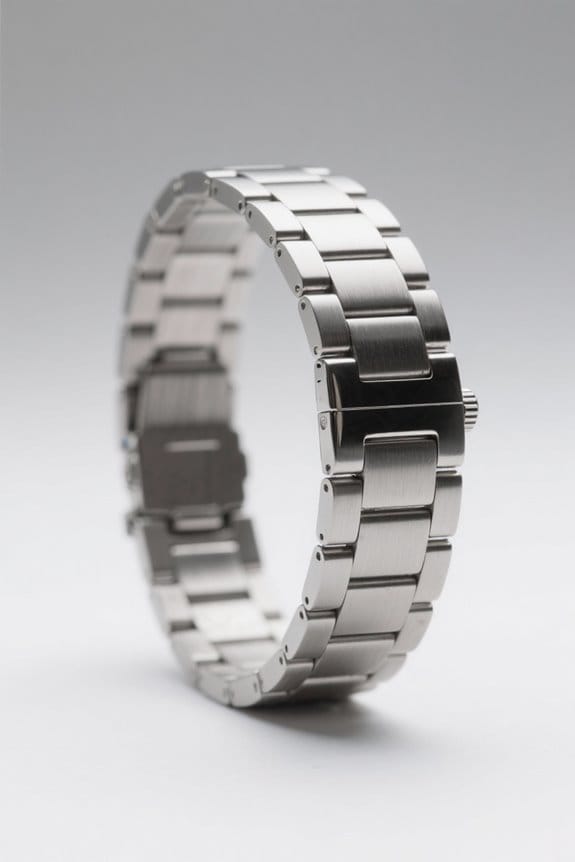
The composition of metal watch bands considerably influences their performance in resisting corrosion. Stainless steel, particularly the 316L grade, offers robust corrosion resistance, thanks to its alloy composition that includes molybdenum. This makes it less susceptible to rust, especially for individuals with active lifestyles exposed to moisture and saltwater.
In contrast, 304 stainless steel lacks the durability of 316L, making it more prone to oxidation in harsh conditions. Regular maintenance, such as cleaning with mild soap and avoiding abrasive materials, is vital to enhance corrosion resistance. Additionally, while the nickel in stainless steel improves resistance, it can lead to allergic reactions in some users. Many fitness tracker bands utilize premium 304 stainless steel to balance corrosion resistance with comfort and longevity for everyday wear. Understanding these factors helps consumers choose metal bands that best fit their needs.
Comparing Corrosion Resistance: Stainless Steel vs. Other Metals

When evaluating watch bands, different metals exhibit varying levels of corrosion resistance that can greatly affect their durability and performance. Among stainless steel options, 316L stainless steel stands out due to its molybdenum content, enhancing its resistance to humidity and marine conditions. In comparison, titanium also offers excellent corrosion resistance via its protective oxide layer, making it effective against seawater and chlorinated environments.
However, grade 304 stainless steel is less effective in high-moisture situations, lacking the advanced properties found in 316L. For luxury watch bands, 904L stainless steel provides the highest corrosion resistance, particularly in acidic environments but comes with a higher price tag. Meanwhile, metals like aluminum are prone to corrosion, rendering them unsuitable for humid applications. While metal bands offer superior corrosion resistance in harsh environments, leather watch bands with oil-sealed edges provide enhanced moisture protection for those preferring traditional materials.
Maintenance Tips for Corrosion-Free Watch Bands

To guarantee longevity and prevent corrosion, regular maintenance of metal watch bands is essential. Cleaning metal watch bands with warm water and mild soap helps remove dirt and oils that can cause corrosion. For stainless steel options, choosing grade 316L stainless steel is advisable due to its superior corrosion resistance.
Avoid exposing the watch band to harsh chemicals, chlorine, or seawater, as these can compromise even high-quality materials. Store the watch in a soft-lined case to protect it from scratches and environmental factors. Applying a protective coating or polish specifically designed for metal can enhance corrosion resistance and maintain the band’s shine, ensuring durability and beauty with daily wear. For users seeking maximum corrosion resistance, titanium band options offer lightweight construction combined with exceptional durability for outdoor activities and daily wear.
Choosing the Right Material for Your Lifestyle

Choosing the right material for a watch band greatly impacts its performance and durability. Stainless steel, particularly 316L, offers superior corrosion resistance suitable for daily wear, while titanium provides exceptional protection against seawater. Individuals engaged in sports may prefer rubber or titanium watch bands due to their high durability and moisture resistance.
Selecting the right materials used in watch bands should align with one’s lifestyle; those who swim frequently should avoid materials that corrode easily. Regular maintenance, such as cleaning stainless steel bands with soap, enhances their corrosion resistance. For those seeking versatility, soft silicone and breathable nylon bands provide waterproof designs that ensure usability during workouts and daily activities while reducing skin irritation. Ultimately, the choice of watch band material must reflect personal style and the environmental challenges faced in everyday activities to guarantee lasting durability.
Frequently Asked Questions
Do Metal Watch Bands Rust?
Metal watch bands can rust depending on metal types and alloy composition. Proper watch maintenance minimizes oxidation process risks, especially with water exposure. Care tips including regular cleaning enhance durability factors and align with evolving fashion trends.
Which Metal Has the Highest Resistance to Corrosion?
Titanium alloys demonstrate the highest corrosion resistance among metals, effectively countering environmental factors and corrosion mechanisms. Noble metals, while resistant, require proper jewelry maintenance; protective coatings can prevent galvanic corrosion, enhancing longevity in metal comparisons.
How Long Do Metal Watch Bands Last?
How long do metal watch bands last? Watch band longevity typically spans 10 to 20 years, influenced by metal band durability, everyday wear considerations, and proper maintenance tips to combat environmental factors and guarantee ideal watch band care.
Is Stainless Steel 100% Rust Proof?
Stainless steel is not 100% rust-proof; its durability depends on alloy compositions. Corrosion resistance mechanisms are influenced by environmental impact factors, while care maintenance tips and rust prevention techniques can enhance watch band longevity against metal oxidation processes.


