As an Amazon Associate, we earn from qualifying purchases. Some links on this site are affiliate links at no extra cost to you. Our recommendations are based on thorough research and editorial judgment.


Spring Bar Replacement: When and How

Spring bars are essential for secure watch straps. Replace them if you notice bending, wear, visible damage, or corrosion. Non-integrated straps should be replaced every 6-12 months, while bracelet-based watches can extend to every 2 years. To replace, use a spring bar tool correctly; compress the bar to remove and fit new ones by aligning them properly. Regular inspections can help maintain watch safety. Continue to explore best practices and tips for proper spring bar care.
Key Takeaways
- Replace spring bars every 6-12 months for non-integrated straps, and every 2 years for bracelet-based watches to ensure safety.
- Inspect for signs of wear, such as bending, corrosion, or visible damage; replace immediately if found.
- Use a spring bar tool properly: flat end for drilled lugs, thinner fork for metal bracelets, and a wider fork for leather/rubber straps.
- Choose the correct length and thickness of spring bars for compatibility with your watch; verify specifications before purchase.
- Maintain regular inspections and consider preventive replacements every 2-3 years to avoid unexpected failures.
Importance of Spring Bars in Watch Maintenance
You may be interested


Spring bars play an essential role in keeping watches securely attached to their wearers. These small yet important components prevent watches from falling during daily activities, providing crucial security for the timepiece. Spring bars often endure wear and tear, which can lead to potential loss or damage if not regularly inspected.
Routine maintenance is important; replacing spring bars every 6-12 months for non-integrated straps is recommended. Bracelet-based watches can extend this to every 2 years. Ensuring the correct size and thickness of spring bars is equally significant, promoting compatibility and overall watch safety. Similar to fitness trackers, many watch bands now feature quick-release mechanisms that allow for tool-free installation and removal, making strap changes more convenient for users. By prioritizing spring bar upkeep, wearers can avoid catastrophic failures, costly repairs, and the distress of losing a beloved watch.
Signs It’s Time to Replace Your Spring Bars

Maintaining the integrity of any timepiece involves paying attention to its components, including the essential spring bars. Signs of bending, wear, or visible damage on spring bars indicate they should be promptly replaced to prevent watch detachment. Regular inspections are advisable; if corrosion or dirt accumulates, replacement is necessary for safe usage.
When straps slide off or detach easily from the lugs, it suggests weakened spring bars, necessitating immediate attention. For watches used frequently or during physical activities, consider replacing spring bars every 6-12 months. Even in the absence of visible issues, a preventive replacement every 2-3 years is recommended. Utilizing a spring bar tool can simplify this replacement process for maximum performance and security. Similar to how metal connectors on watch bands require firm and secure attachment to prevent accidental loosening during wear, spring bars must maintain their tension and structural integrity to keep your watch safely fastened.
Recommended Products

PILATES WORKOUT EQUIPMENT: Maximize your Pilates workout with this Tower and Mat Retrofit Kit. This kit provides a complete upgrade for your Allegro 2 Reformer by adding many Trapeze Table capabilities to expand your exercise options without taking up more space.

GRID PARABOLIC ADVANTAGE - Using Griddy, our Ultra-High Gain Grid Parabolic Antenna along with the strongest booster on the market will give you the best level of improvement possible from this device.

Control Arms Kit Replacement for 2007 2008 2009 2010 2011 2012 2013 Chevrolet Silverado 1500 (2WD, Cast Iron Lower Control Arm Models Only, Excludes Off-Road Models; Excludes Electronic Suspension ) - [2007-2013 GMC Sierra 1500 (2WD, Cast Iron Lower Control Arm Models Only, Excludes Off-Road Models; Excludes Electronic Suspension )]
Recommended Replacement Frequency for Spring Bars

For ideal watch performance, understanding the recommended replacement frequency for spring bars is essential. Generally, spring bars should be replaced every 6-12 months for watches with non-integrated straps, such as rubber, leather, or fabric. This proactive approach helps guarantee safety and reliability.
For watches equipped with metal bracelets, it is advisable to replace spring bars every two years due to less tension and wear.
Routine inspections of spring bars for signs of wear or corrosion are also important. If any damage is detected, immediate replacement is necessary to avoid losing the watch. Just as multi-device charging stations help reduce clutter and keep accessories organized, maintaining a schedule for spring bar replacement keeps your watch collection secure and well-managed. By following these guidelines, the risk of failure can be minimized, allowing for a securely fastened timepiece.
Recommended Products

Unmatched Comfort & Adjustability: Elevate your sleeping experience with our head (up to 75°) and foot (up to 45°) lift mechanism, allowing for perfect positioning. The additional head (pillow) tilting feature provides personalized comfort. By adjusting your sleeping position to the ideal angle, you can benefit from clearer airways, decreased congestion, lessened snoring, and better spinal alignment to ease back pain.

NATIONWIDE WARRANTY SERVICE – Includes an extended premium warranty ($200 value) with a dedicated nationwide service contact for fast assistance with warranty claims and replacement parts, providing added peace of mind. Please only reach out to Irvine Home Collection regarding warranty related inquiries.
Sturdy Support: Yiree adjustable electric bed frame is made of high-quality steel, strong support for mattress and bedding, extraordinary support ability makes it able to carry 900 lbs.
How to Use a Spring Bar Tool Effectively

Using a spring bar tool correctly can simplify the process of changing watch straps. First, identify the right end of the tool: a flat-ended pin for drilled lugs or a thinner fork end for metal bracelets. When removing rubber or leather straps, place the wider fork-end between the strap and lug, then compress the spring bar to release it. For metal bracelets, locate the cut-away slots at the end-links, insert the thinner fork end, and push the spring bar inwards to detach it. Always work on a clean surface to avoid losing small parts and store any removed straps safely. When fitting a new strap, compress the spring bar while placing one end into the lug hole, ensuring proper alignment before release. For fitness tracker users, replacement bands made from durable TPE silicone or TPU material offer comfortable alternatives that require no tools for installation.
Recommended Products

Complete set of high quality professional watch tools
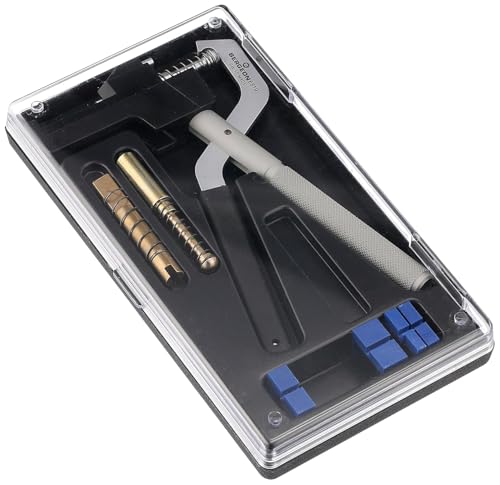
Swiss made watch pin pliers

watch case opener with mini black holder
Different Types of Spring Bars and Their Compatibility

Understanding the various types of spring bars is essential for anyone looking to change watch straps or guarantee a secure fit. Spring bars typically range in length from 16mm to 24mm, with thickness impacting their compatibility with different watch lugs. Some spring bars feature a crimped design for a more secure fit, while others have a cylindrical shape.
Compatibility is vital; for example, Rolex watches require specific OEM spring bars tailored to their lug designs, whereas other brands may utilize standard sizes. Heavy-duty spring bars, like those for Garmin watches, are thicker and built for rigorous activities. Users should always check their watch’s specifications to avoid potential misalignment or failure, particularly in active settings. Similarly, fitness tracker bands like those for Fitbit Charge 6 utilize precise connectors that enable seamless attachment without requiring tools, making band replacement quick and hassle-free.
Recommended Products

TSAR BOMBA - Sportsman:The aesthetics of the race course are interpreted and the spirit of the "athlete" is infused into it. The 40-hour energy reserve, their unquenchable fire of enthusiasm makes you watch the long-distance race with breathless concentration. The "athlete" will follow the time with uncompromising precision after being filled with energy. With TB-8210 Watch compact lines and instant transparency, the appearance of each bridge, each line and each gear must be impeccable.

Model: SN0118-G Movement: NH35 [Automatic mechanical movement] Case: Material - 316L Stainless Steel Diameter: 40mm Lug to Lug: 47.5mm Thickness: 12.4mm Band Length: Bracelet 180mm/7.1in Strap 195mm/7.7in Band width: 20mm

Adjustable gray 16mm silicone strap with orange accents fits up to 8-inch wrist circumference; quick-release spring bars
Step-by-Step Guide to Removing a Watch Strap
Removing a watch strap requires precision and the right tools, ensuring a smooth process without damaging the watch. For straps with drilled lugs, insert the flat-ended pin of the spring bar tool into the drilled hole and push inwards, while wiggling the watch strap gently. When dealing with metal bracelets, locate the cut-away slots on the end-links and use the thinner fork end to push the spring bar inwards for release. For rubber or leather straps, position the wider fork-end between the strap end and lug, pulling the spring bar in until it releases. Always work on a clean surface to avoid losing spring bars, which should be inspected and considered for replacement every 6-12 months. Before installing a new band, verify the lug width compatibility, as most standard watch bands fit common sizes like 20mm, ensuring proper fit for your specific watch model.
Tips for Fitting a New Watch Strap
Fitting a new watch strap can be straightforward when following the correct steps. Begin by inserting one end of the spring bar into a lug hole, ensuring it is seated properly. Then, utilize a spring bar tool to compress the spring bar and align it with the opposite lug hole, lowering it securely into place.
After installation, it’s essential to check that both ends of the spring bar are fully seated within the lug holes by tugging gently on the strap. Additionally, work on a clean, well-lit surface to avoid misplacing small components. Finally, always inspect the spring bars for signs of wear or damage, as compromised bars could risk the watch’s security. Many modern replacement bands feature a quick-release mechanism that eliminates the need for tools, making strap changes faster and more convenient.
Quality Considerations When Choosing Spring Bars
How can one guarantee they select the right spring bars for their watch? Quality considerations are important for ensuring the durability and security of your watch. OEM (Original Equipment Manufacturer) spring bars typically offer superior construction compared to generic options, enhancing longevity.
It is essential to match spring bars with both the watch lugs and the type of strap or bracelet used, as compatibility affects performance. Additionally, a crimped design may lead to misalignment, so careful selection is necessary. Regularly inspecting spring bars for wear can prevent potential failure. Utilizing high-quality replacements, particularly from reputable brands, can greatly lower the risk of losing your watch due to spring bar issues during everyday activities. When selecting bands or straps, consider options crafted from durable silicone or high-quality materials that work seamlessly with properly fitted spring bars to ensure optimal performance and comfort.
Recommended Products

FRIENDLY REMINDER (Many returns are caused by ordering the wrong size) | The F-150 comes in three different bed lengths. This retractable truck bed cover is only compatible with the 5.5 ft short bed—it will not fit the 6.5 ft or 8.0 ft versions. Since return shipping for large items can be costly, please double-check your bed length before purchasing to avoid unnecessary fees.

Front End Kit Replacement for 2000-2001 Ford Focus (Built After 7/1/2000) - [2002 2003 2004 Ford Focus (LX / SE / ZTS / ZTW / ZX3 / ZX5 Models ONLY; 2004: Models Built BEFORE 4/4/2004)]

Front Struts Kit Replacement for 2009 Dodge Caliber (SE, SXT; 2.0L) - [2010-2011 Dodge Caliber (Express; FWD Models)] - 2012 Dodge Caliber (SE, SXT)
Frequently Asked Questions
How Often Should I Change Spring Bars?
Spring bar longevity typically suggests replacement intervals of 6 to 12 months for non-integrated straps, every two years for metal bracelets, and every 4 to 7 years during regular servicing, depending on usage and condition.
How to Put Spring Bar Back in Watch?
Approximately 60% of watch repairs involve spring bar issues. To reinstall a spring bar, one must use spring bar tools for compression, ensuring each end snugly fits into the lug holes for secure fastening and integrity.
Do Watch Spring Bars Wear Out?
Watch spring bars, known for their durability, can indeed wear out over time due to frequent use and environmental factors. Regular inspections help identify wear, ensuring peak performance and preventing potential watch loss.
How to Remove Quick Change Spring Bars?
To remove quick change spring bars, one should pull the lever or push the button, compressing the bar. Utilizing spring tools, one can wiggle the strap gently for easier removal, ensuring a safe process.